


Economy
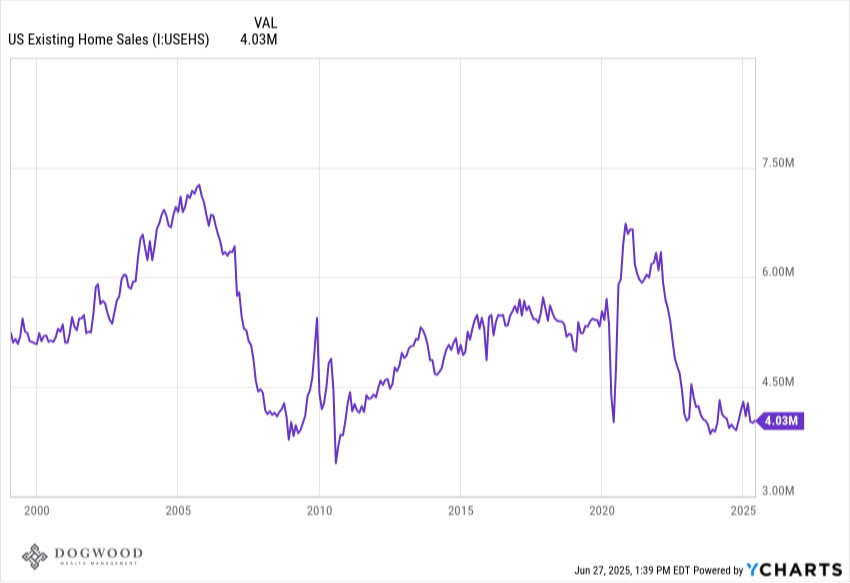
There's a lot to cover on the economic news front from this past week. For starters, existing home sales for the month of May came in pretty weak. This was the worst May for existing home sales in 16 years (if you exclude 2020 from the data because of the pandemic). Sales of new homes in May showed a similar theme, the lowest figures for May since 2019. This may not come as a surprise to anyone following the housing market as mortgage rates remain elevated by recent historical standards and prices have not budged much.
On the inflation front, the Fed's favorite benchmark for inflation rose slightly more than expected last month, possibly pointing towards them leaving interest rates unchanged at their meeting at the end of July. There's mounting political pressure from the White House on the Fed to cut rates, but the Fed remains vocally concerned about the possibility of inflationary impacts stemming from tariffs in the second half of this year.
Next week is a holiday-shortened week, so before the fireworks go off on Friday, we'll get a read on the health of the labor market on Thursday morning with the nonfarm payrolls report. Expectations are for a number around 130,000 jobs created for the month of June. This week showed a slightly lower number of people filing for unemployment insurance for the first time compared to the last several weeks.
Next week is a holiday-shortened week, so before the fireworks go off on Friday, we'll get a read on the health of the labor market on Thursday morning with the nonfarm payrolls report. Expectations are for a number around 130,000 jobs created for the month of June. This week showed a slightly lower number of people filing for unemployment insurance for the first time compared to the last several weeks.
Markets
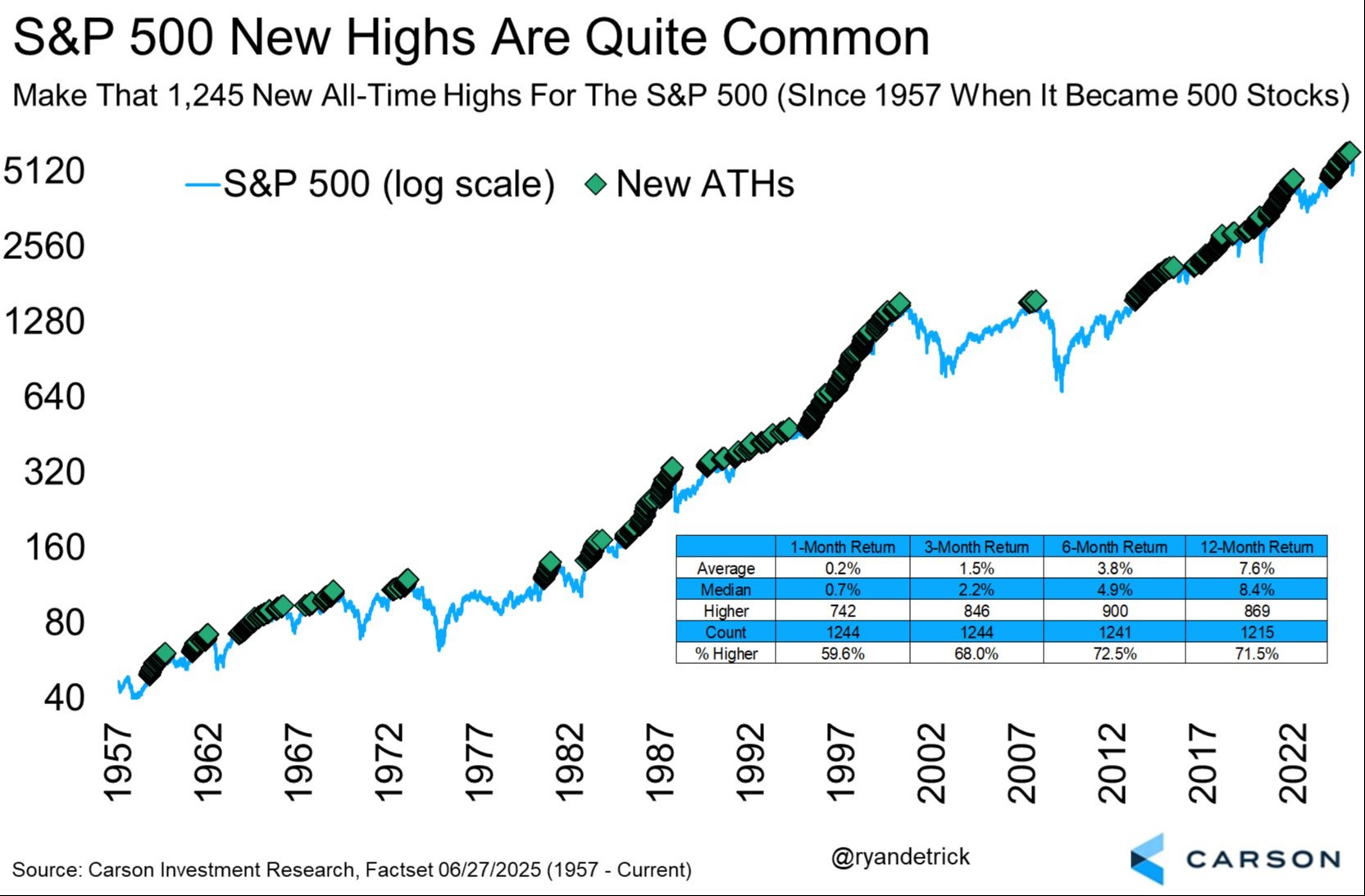
The S&P 500 closed at a record high level Friday afternoon. For the week, the index rose 3.44% as Wall Street reacted to the news of a ceasefire between Israel and Iran as well as progress on a trade deal between the US and China. The S&P 500 last peaked in February, and between then and now we saw the index decline by nearly 20%. The market seems to be looking through tariffs in anticipation of some level of stimulative tax reform from the pending "big beautiful bill" that President Trump is pushing to get to his desk by July 4. Friday's close marks the fourth new all-time high for the S&P 500 of the year. We frequently wrote about the significance of all-time highs last year as we saw 57 of them in 2024. Ryan Detrick of Carson has a great table he put together showing that forward returns after all-time highs have historically been very good. Not only are new highs fairly common, but they tend to cluster together as the momentum of the market tends to keep the trend in place for periods of time.
What We're Reading
- US Economy Shrugs Off Trade War and Soldiers On - WSJ
- All Time Highs Are Bullish - Barry Ritholtz
- Halfway There: 5 Key Moves for 2025 - Dogwood
Have a great weekend.
Dogwood Wealth Management