i
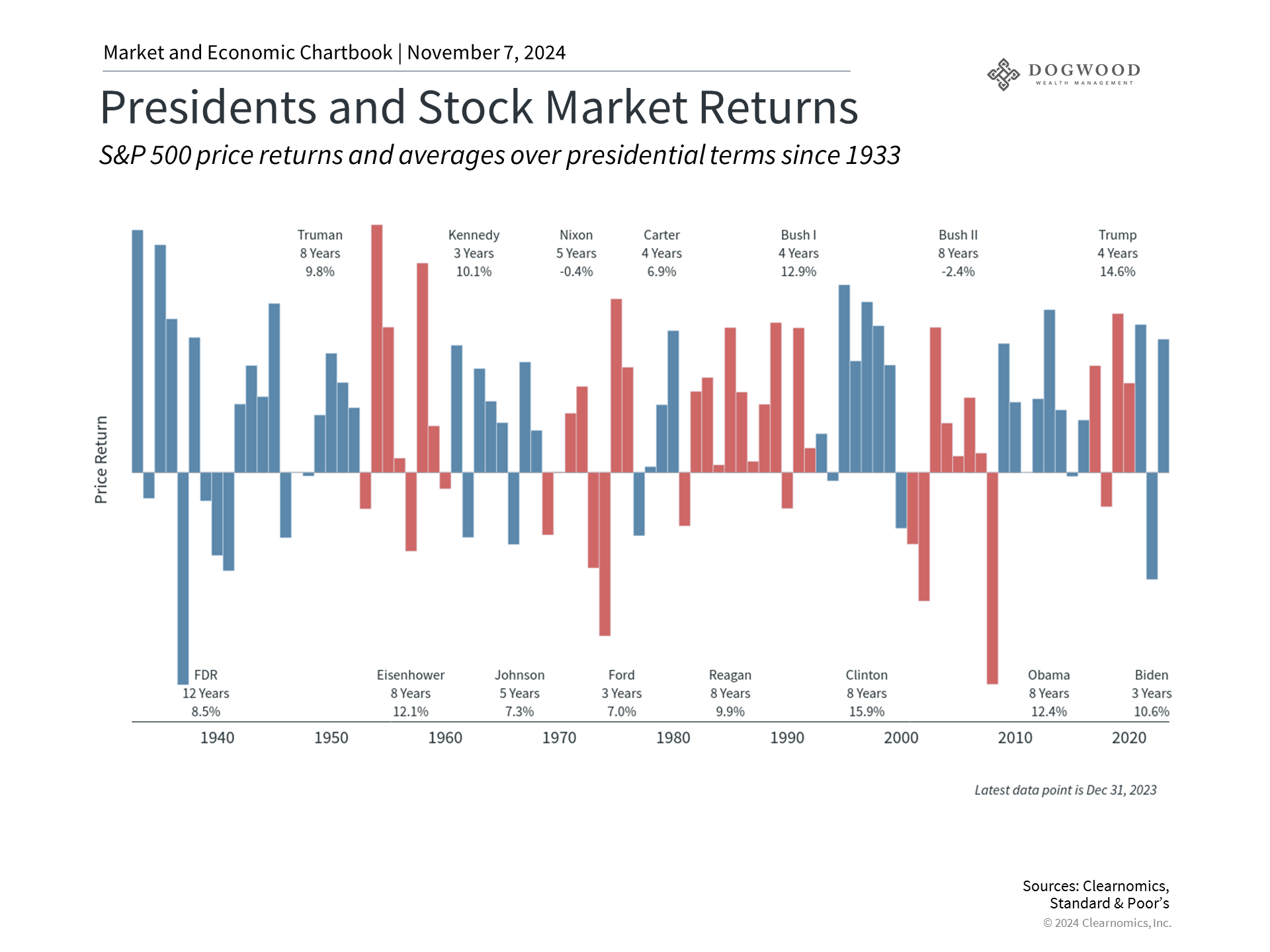
The 2024 presidential election has concluded with Donald Trump winning the presidency and Republicans gaining control of the Senate. While this outcome brings joy to some and disappointment to others, it's important to understand what this means for your investments, while acknowledging the current divide in our nation. Both political parties have seen strong market performance
While politics can affect our daily lives and national direction, your investment portfolio often isn't as impacted by election results as you might think. Rather than making quick changes based on emotions, it's better to take a calm, thoughtful approach. Let's look at what the next four years might mean for the economy and markets. Looking back at the last hundred years, the stock market and economy have grown well during both Democratic and Republican presidencies. In the coming weeks, you'll likely hear many different predictions - some very positive, others quite negative. Some experts might expect a big market rise like after the 2016 election, while others might worry about how trade taxes could slow down global business. For people investing for the long-term, the best approach is to stay invested in a mix of different investments while paying attention to basic market factors. Keep in mind that stock prices are already quite high compared to historical averages, so it's wise to build your investment portfolio carefully, ideally with help from a financial advisor. However, be careful about getting too negative about the markets. Almost every president has faced predictions of market crashes - this happened with Obama in 2008, Trump in 2016, and Biden in 2020. It's important to keep your political feelings separate from your investment decisions. Good government policies do matter, but the economy's ups and downs depend on many factors beyond politics. Also, big policy changes usually happen slowly, even when the president's party controls Congress. History shows it's very hard to predict how any specific policy will affect the economy and markets, since stock prices quickly adjust to new policies and companies find ways to adapt. Tax cuts from 2017 are likely to continue
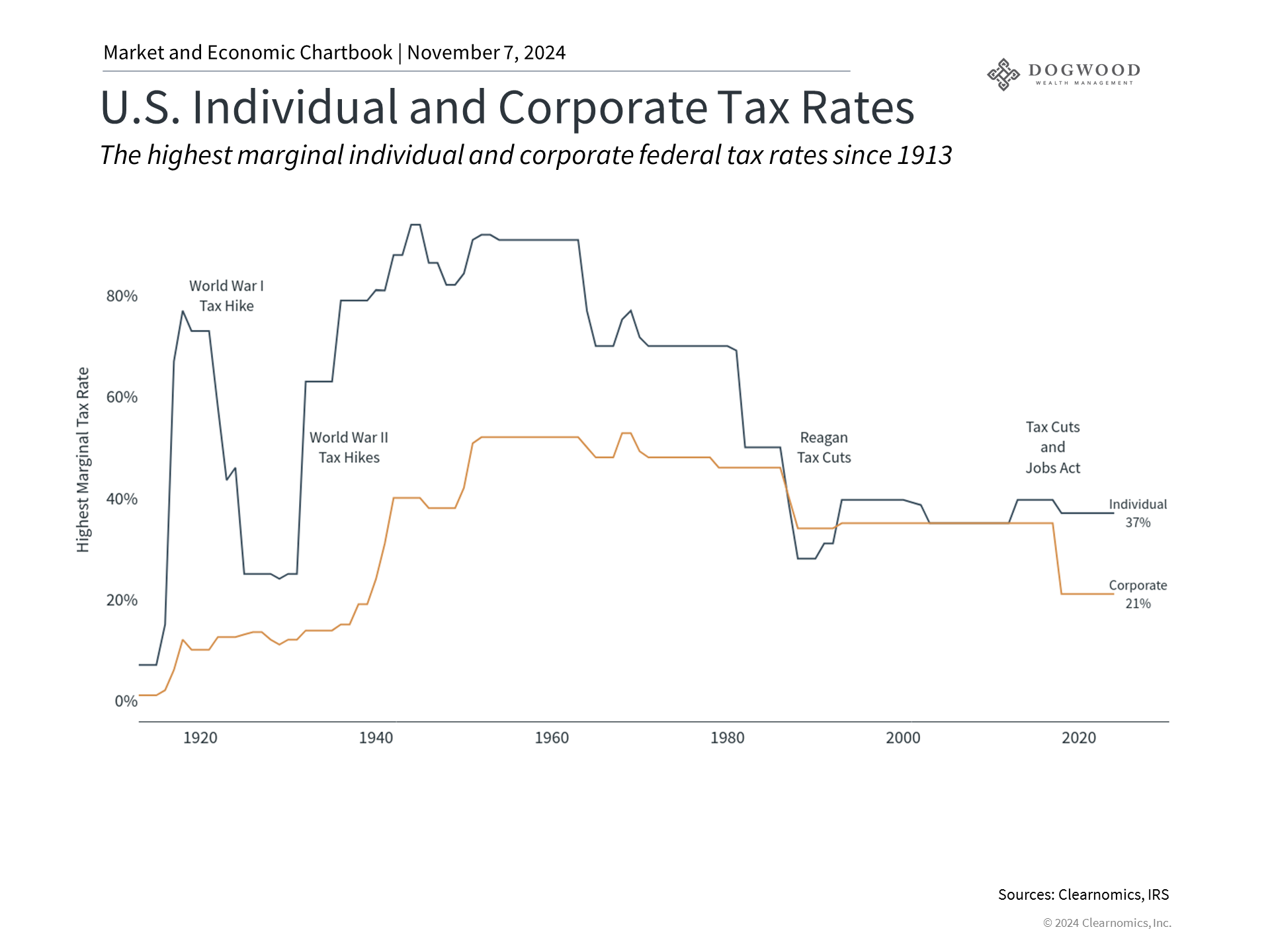
With Republicans winning, the 2017 tax law changes will probably continue past 2025. This law made big changes to taxes for both individuals and businesses. It lowered corporate taxes to 21%, reduced tax rates for many people, and made other important changes to the tax system. Before the election, people weren't sure what would happen with these tax rules, which made financial planning harder. If these tax cuts had expired, it would have meant sudden tax increases for many people and businesses. Some people chose to convert traditional retirement accounts to Roth IRAs to take advantage of current lower tax rates. When thinking about taxes, try to keep a balanced view since it can be a heated political topic. While taxes directly affect how much money people and companies keep, their effect on the overall economy and stock market isn't always clear. This is because taxes are just one of many factors that influence economic growth and investment returns. The market has done well under many different tax systems throughout history, even when the highest tax rates were between 70% and 94% after World War II. Today's tax rates are low compared to the past. As the national debt grows, it's smart to prepare for possible tax increases in the future. Trade taxes and international trade disputes return to center stage
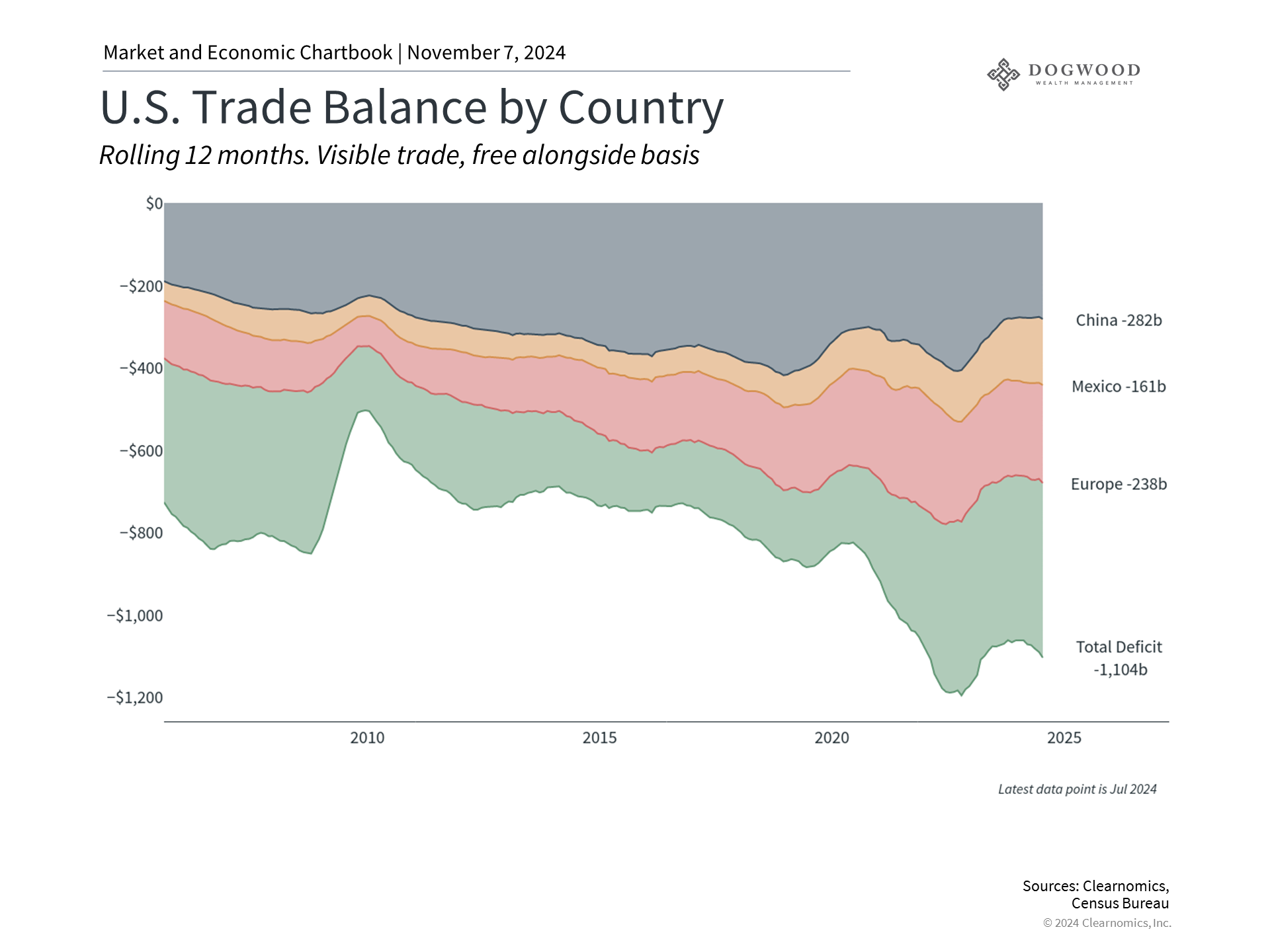
Looking ahead, some investors worry about another trade dispute happening because of new taxes on goods from major trading partners like China, Europe, Mexico, and Canada. During his first term, President Trump put extra charges on many products including steel, aluminum, and other goods. He has suggested raising these charges even higher, up to 60% on Chinese products. Unlike regular tax laws that Congress must approve, the president can create these trade taxes through executive orders. While some worry this could hurt the economy, these situations are complex. When President Trump used trade taxes in 2018 and 2019, it was often to gain leverage in negotiations, leading to a trade agreement with China in early 2020. While people debate if this was successful, the worst predictions about the economy didn't come true. Trade taxes can make goods more expensive for consumers. They also go against the idea that free trade benefits all countries involved. However, they can also protect American industries from unfair competition and help prevent theft of business secrets. Many of the trade taxes from the Trump administration stayed in place under President Biden. The current suggestions for trade taxes show a bigger trend of countries becoming less connected in trade. While these policies might affect certain industries, it's important not to make sudden changes to your investment strategy. Adopt a Long-Term Perspective in Your Investments With the election now behind us, investors will likely shift their focus to other critical factors, such as decisions made by the Federal Reserve regarding interest rates, corporate earnings, and consumer spending. The resolution of election-related uncertainties may, in itself, bolster investor confidence, as has been observed in previous election cycles. Ultimately, the key driver of long-term investment returns is the business cycle, rather than the identity of political leaders. These enduring business cycles are primarily influenced by transformative shifts, including technological advancements, global trade developments, and innovations such as artificial intelligence. For those with an investment horizon spanning years or decades, prioritizing these fundamental, long-term trends is far more beneficial than reacting to the ebb and flow of daily news events. The bottom line? Regardless of your political stance, it is essential to adhere to your investment strategy and maintain a diversified portfolio as the election season concludes. While an understanding of policies related to taxes and trade can be valuable, focusing on sustained, long-term trends remains the most effective approach to achieving your financial objectives. | |||
Dogwood Wealth Management, LLC. ("Dogwood") is a Registered Investment Advisor ("RIA") with the U.S. Securities and Exchange Commission (“SEC”). Dogwood provides investment advisory and related services for clients nationally. Dogwood will maintain all applicable registrations, notice filings, and licenses as required by the various states in which Dogwood conducts business, as applicable. Dogwood renders individualized responses to persons in a particular state only after complying with all regulatory requirements, or pursuant to an applicable state exemption or exclusion.  |