


Economy
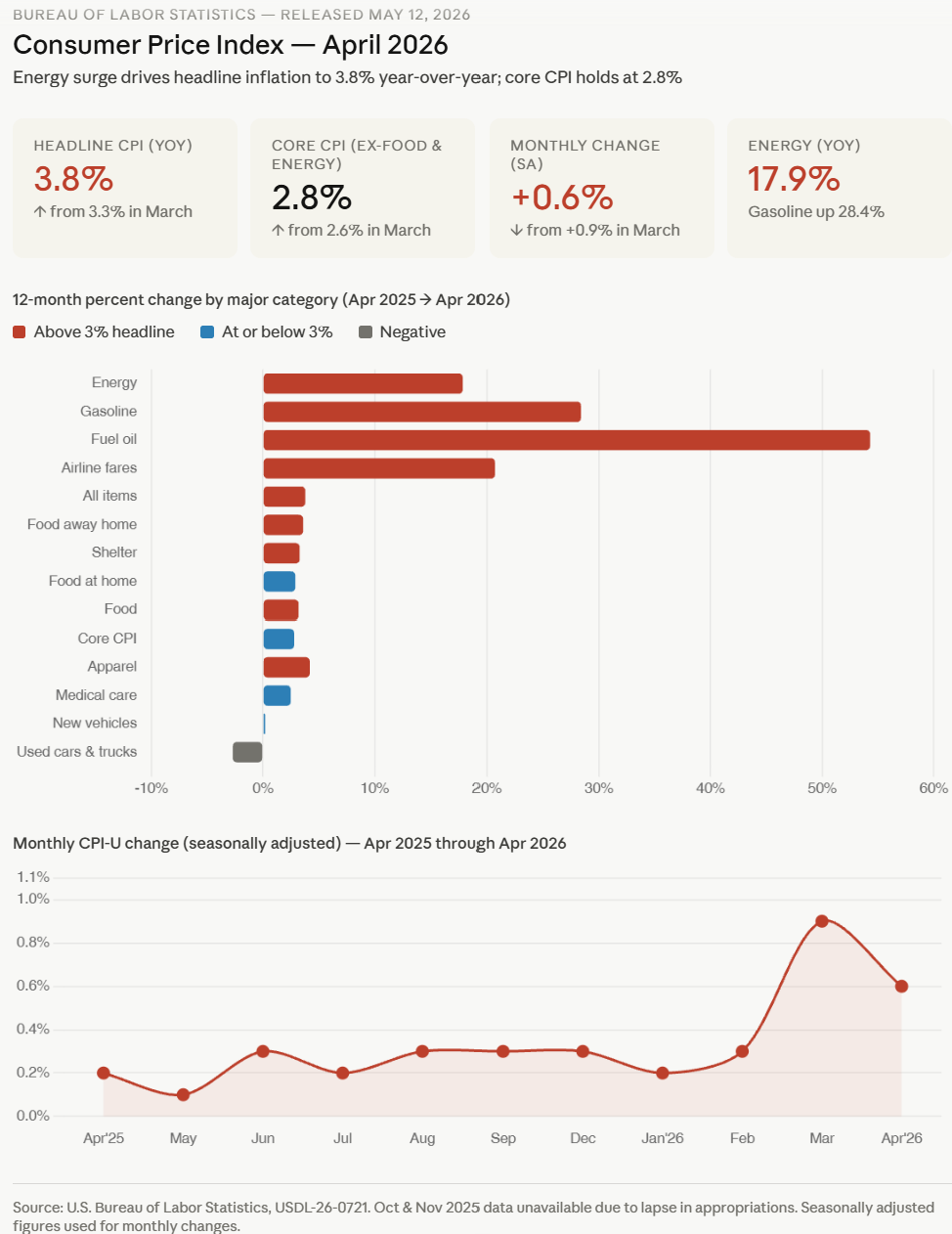
Inflation jumped in April to the highest level in 3 years, a disappointing but expected result of higher oil prices due to the Iran war. Headline inflation rose to 3.8%, while core inflation came it at 2.8%. Core inflation removes food and energy prices and is typically a better indicator of the long-term trends.
The report was released the same day Kevin Warsh was confirmed by the Senate as a Fed governor, and he'll have his hands full when he takes over as Chair for Jerome Powell. The question at the start of the year of "how many times will the Fed cut rates in 2026?" is now replaced with "are we actually going to see a rate increase in 2026?"
Markets
The S&P 500 limped across Friday's finish line to secure seven consecutive weeks of gains. For the week the index was up 0.12% but Friday's decline of 1.24% put the streak in jeopardy. Treasury rates rose this week as the markets digested the inflation report and are apparently coming to grips with the fact that we will likely not see a cut to interest rates this year. According to the CME Group's FedWatch Tool, there's now greater than a 50% probability of a rate increase by the end of 2026. While we are seeing the bond market reset expectations, the equity markets appear to be taking things in stride. The S&P 500 is up more than 8% this year, while the small cap index Russell 2000 has fared even better, up more than 12%.
What We're Reading
- Suspicious Betting in Washington Is on the Rise—and Authorities Are Playing Catch-Up - WSJ
- The Hidden Costs of Getting Tax Planning Slightly Wrong - Retirement Researcher
Have a great weekend.
Dogwood Wealth Management