


Economy
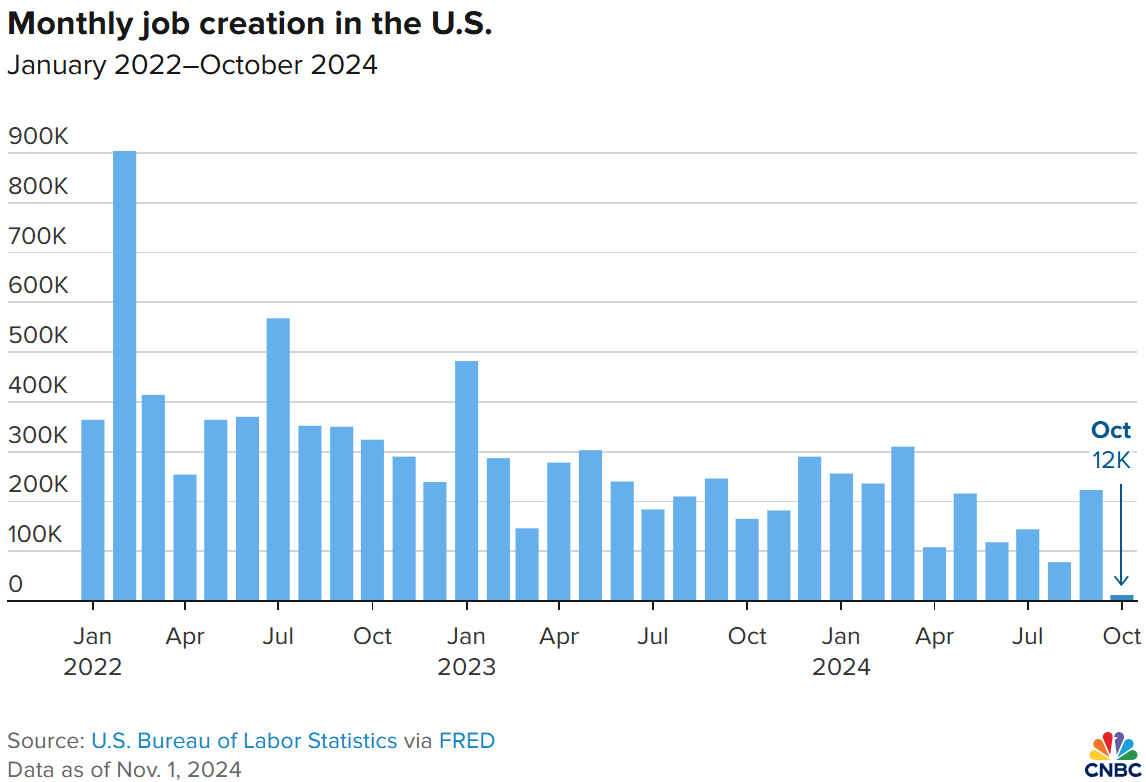
Friday's jobs report left a lot of people scratching their heads and doing their best to rationalize the figures. For the month of October, the US economy added just 12,000 jobs. If that number seems low to you, you're not wrong. For reference, economists had been expecting to see 100,000. In addition, the previous two months have been revised down by a combined 112,000 jobs, so seeing a number in the (very) low 5-digits is a bit alarming. It's a bad report, but don't be so quick to take it at face value. We saw two major hurricanes which had untold impact on the labor market in the short-term. According to the Wall Street Journal, the storms not only impacted the number of people working, but also the survey collection methods the Bureau of Labor Statistics uses to determine the jobs numbers. Regardless of "why" the numbers are what they are, it appears the Fed is set to cut rates next week by 0.25%.
Speaking of rate cuts, you may have noticed that immediately following the Fed's first cut, you got an email from your bank saying they were lowing interest rates (or perhaps the bank did it without notifying you). And yet while the rate on savings accounts should come down in lockstep with the Fed's rate, rates on longer-term debt (treasury bonds, mortgages) went up following the September jobs report. Not all rates move in the same direction at the same time, which is something to keep in mind as we continue to see the Fed bring its rate lower.
Markets
The S&P 500 fell by 1.37% this week, down for a second week in a row. It was a jam-packed week of earnings report releases, with 5 of the "magnificent 7" stocks reporting (and all 5 beating top and bottom line expectations). Despite the overall positive performance of these mega cap tech companies, the market continued to take a breather. With respect to earnings season, we've seen about 70% of the companies in the S&P 500 report so far, and according to FactSet, 75% of them have beat their expected results, which is right in line with the 10-year average.
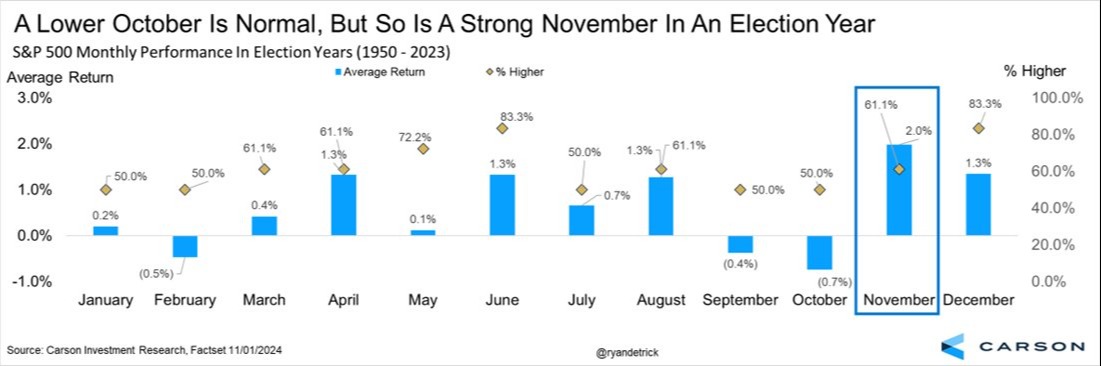
I'd bet if you could go back in time to the end of October and poll a bunch of portfolio managers on their expectations for the market, a lot of them would expect heightened volatility leading up to the election. What's interesting in hindsight is how placid the market actually was. It took until the last day of the month (of course it would be on Halloween) to see the S&P 500 move by 1% or more in a single day. We now find ourselves in a new month, which happens to be the start of the historically best 3-month period of stocks (c/o Ryan Detrick). For what it's worth, October has historically been the worst month for the market in an election year. Can you guess what the best month has been during those years?
What We're Reading
- The 20 Best Art Museums in America - Washington Post
- How Las Vegas Became the Weirdest, Wildest, and Most Futuristic City in America - GQ
Have a great weekend.
Dogwood Wealth Management