


Economy
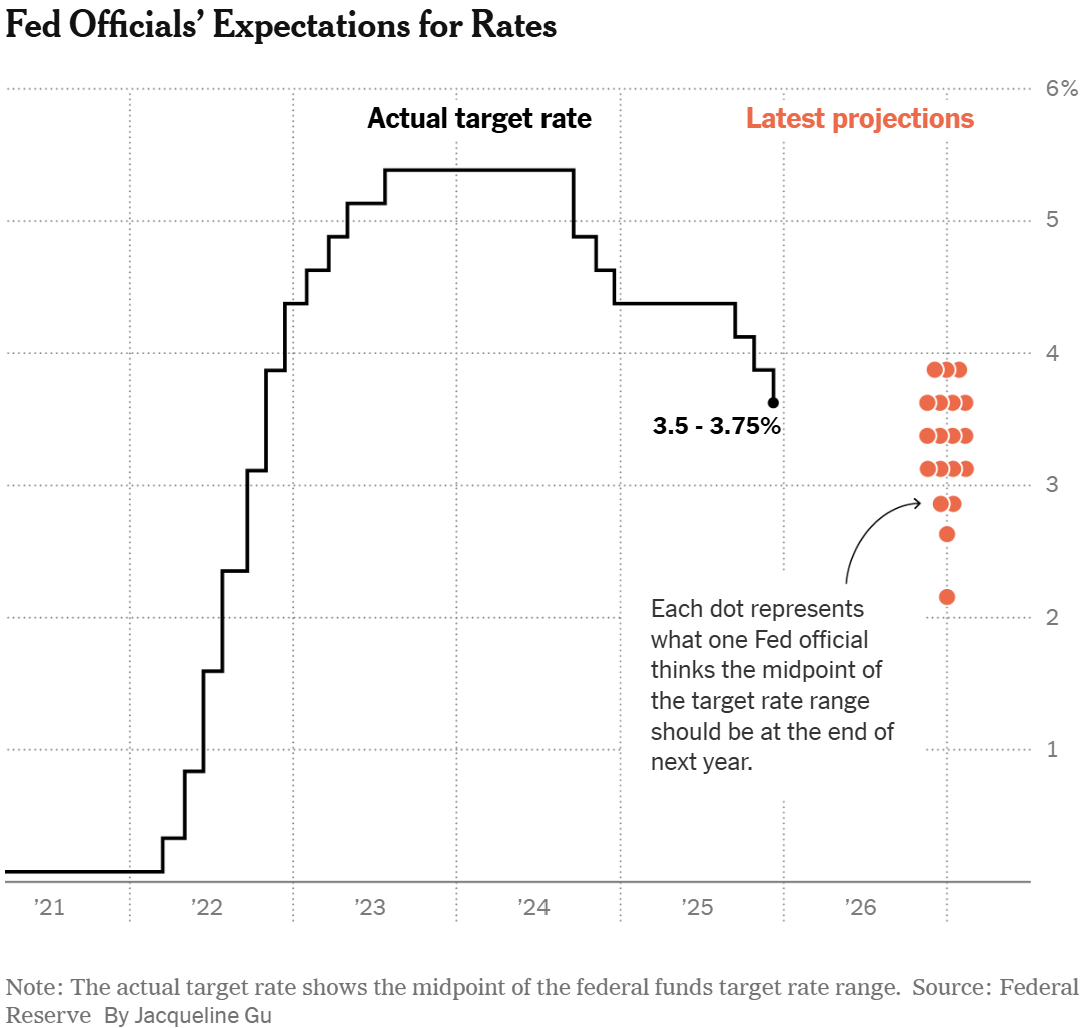
As expected, the Fed cut rates this week by 0.25%, the third rate cut this year. The Fed began cutting rates 15 months ago when it's target range was 5.25% - 5.5%. As a result of this week's announcement, that range is now 3.5% - 3.75%, almost a full 2% lower than when this cutting cycle began. Back in January of 2022, rates had been held at 0% for nearly two years before inflation creeped in. To slow inflation, the Fed raised rates from 0% to 5.5%, but the side effect was a slowing labor market, which we now see signs of today. While inflation remains above where the Fed would like it (2.8% vs. the target of 2%), a weak labor market has taken precedence, hence the Fed slowly bringing interest rates back down. In summary, we've got inflation slowed down, but not where the Fed wants it, but we're also contending with a labor market that has been showing signs of stress for several months now. A tricky place to be if you're in charge of setting monetary policy.
So where do we go from here? If you look at the people who are actually deciding where rates should be set (the Federal Open Market Committee), you're probably just as uncertain as they are. While we got a rate cut this week, three of the twelve voters disagreed with the majority. Two members said we shouldn't be cutting rates at all, while a third voted for a cut of 0.5%. With a vote of 9-3, it's the most dissenting votes in over six years at one of these FOMC meetings. When surveyed about where the FOMC members think rates will be at the end of next year, it looks like someone patterning a shotgun. The median projection is for just one cut of 0.25% next year. Oh, and if monetary policy uncertainty wasn't enough on its own, we'll be getting a new Fed chair appointed by President Trump, who called this week's rate cut "rather small" and suggested they could have doubled it.
Markets
After closing above 6,900 for the first time ever on Thursday, stocks sold off Friday leading to a losing week for the index. For the week, the S&P 500 fell 0.63%. You'll sometimes read about "rotation" in the markets, which means money moves from one group of investments to another. That's exactly what we saw taking place this week. While there was a selloff in large technology stocks, there was a lot of demand for smaller companies, and the Russell 2000 index (which is comprised of these smaller companies) actually rose by 1.2%. The S&P 500 index is a market cap weighted index, which means the biggest companies make up a proportionate size of the index. Alternatively, if you look at the equal weight S&P 500, it closed positive on the week. The decline in the S&P 500 this week wasn't indicative of a run to the exits. Rather, it appears investors' appetite for growth stocks has shifted (for now) in favor of other flavors of stocks. There are just a few weeks left of trading in 2025, and it's been a great year for a diversified portfolio, as we've seen gains in nearly all major asset classes.
What We're Reading
- My Favorite Investment Writing of 2025- Nick Maggiulli
- The Era of the Pickle is Upon Us- Business Insider
Have a great weekend.
Dogwood Wealth Management