


Economy
As expected, the Federal Reserve lowered interest rates by 0.25% on Wednesday. The cut comes in response to a labor market that has slowed significantly over the last few months. Despite inflation remaining above the Fed's target (stubbornly so), the risks to the labor market of high interest rates has taken precedence. Last week we wrote about how the Fed has been given two mandates - stable prices (keep inflation low) and maximum employment (provide an environment for businesses to grow). When inflation is high, the Fed raises rates to slow down the economy. When unemployment rises, the Fed cuts rates to spur economic activity, leading businesses to need to hire. If you think of those double pan scales with inflation on one side and the labor market on the other, the Fed is currently shifting to prioritize the health of the labor market over inflation with this latest move.
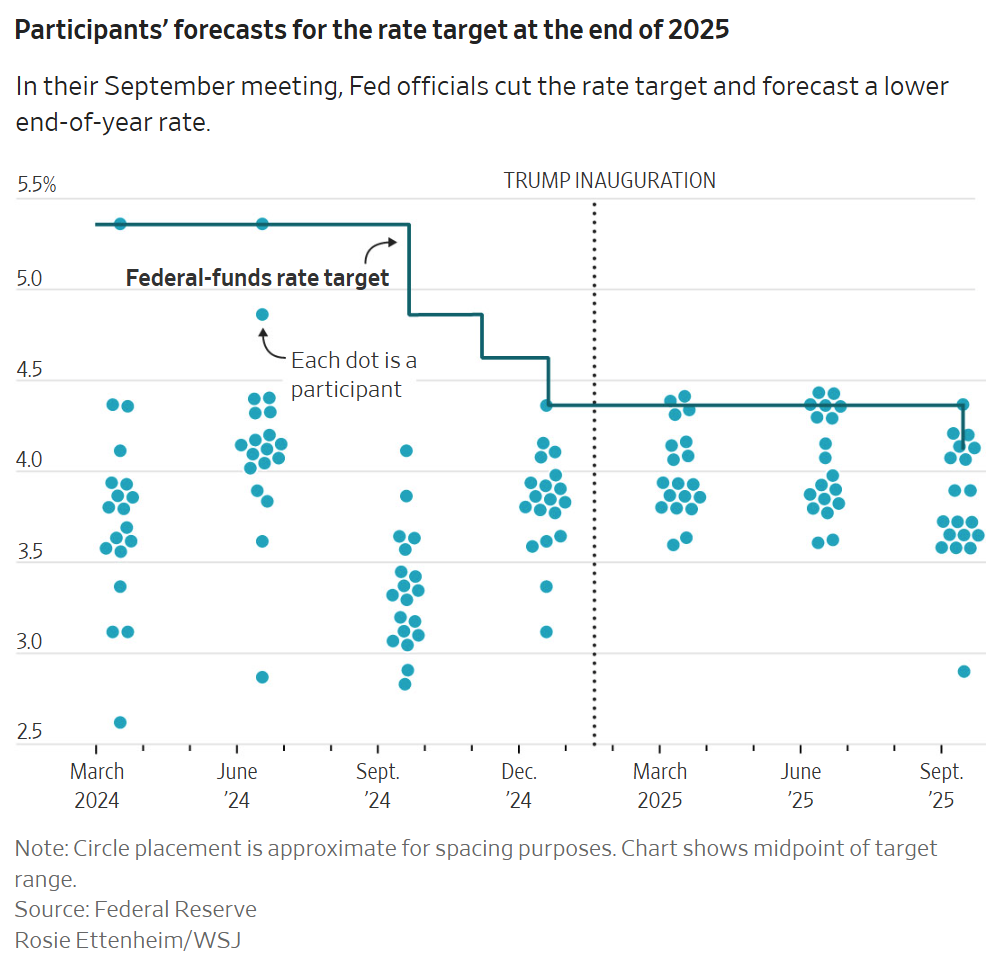
What we find fascinating is the dispersion of where the individual members of the Fed think interest rates will be between now and the end of the year. There were 19 members of the Fed who anonymously submitted their predictions, and they ranged from no further rate cuts between now and December 31, all the way to 5 more rate cuts. Bear in mind there are only two more Fed meetings in that timespan. Even the people making the decisions on interest rates seem to have no idea how the rest of the year will play out. The median prediction was for two more rate cuts, and that seems to be what Wall Street has priced in, according to the CME Fed Watch Tool, which looks at how bond traders are pricing short-term bonds.
Markets
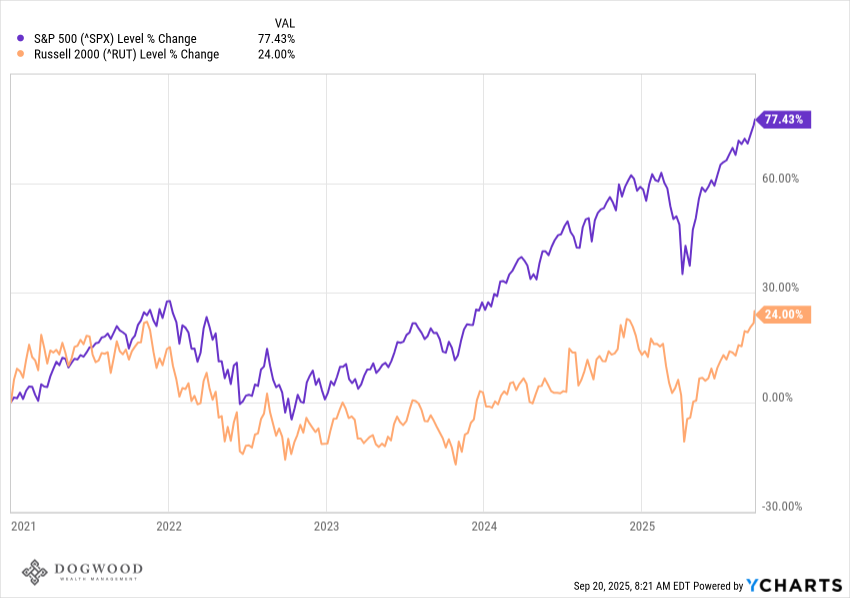
Even though the 0.25% rate cut was widely expected, markets still reacted favorably to the news with the S&P 500 closing out the week up 1.22% and setting a new all-time high. Fairing even better this week were small cap stocks. It's difficult to lump stocks into just a few groups, but typically companies with market capitalizations (a term that can be compared to how individuals use the term "net worth") of more than $10 billion are considered "large cap" and companies with market capitalizations less than $2 billion are considered "small cap". (Companies in between these numbers are called "mid cap".) Small cap stocks have been impacted more harshly by the Fed's interest rate hiking campaign. We saw more evidence this week of the heightened sensitivity to rate moves by small cap stocks relative to their larger peers this week, with the Russell 2000 (an index for small cap stocks) hitting a new all-time high for the first time in 4 years.
What We're Reading
- Could Scott Bessent Run Both the Treasury and the Fed?- CNBC
- Wall Street Bets Rates Will Drop Much More Than the Fed’s Forecasts - WSJ
Have a great weekend.
Dogwood Wealth Management