


Economy
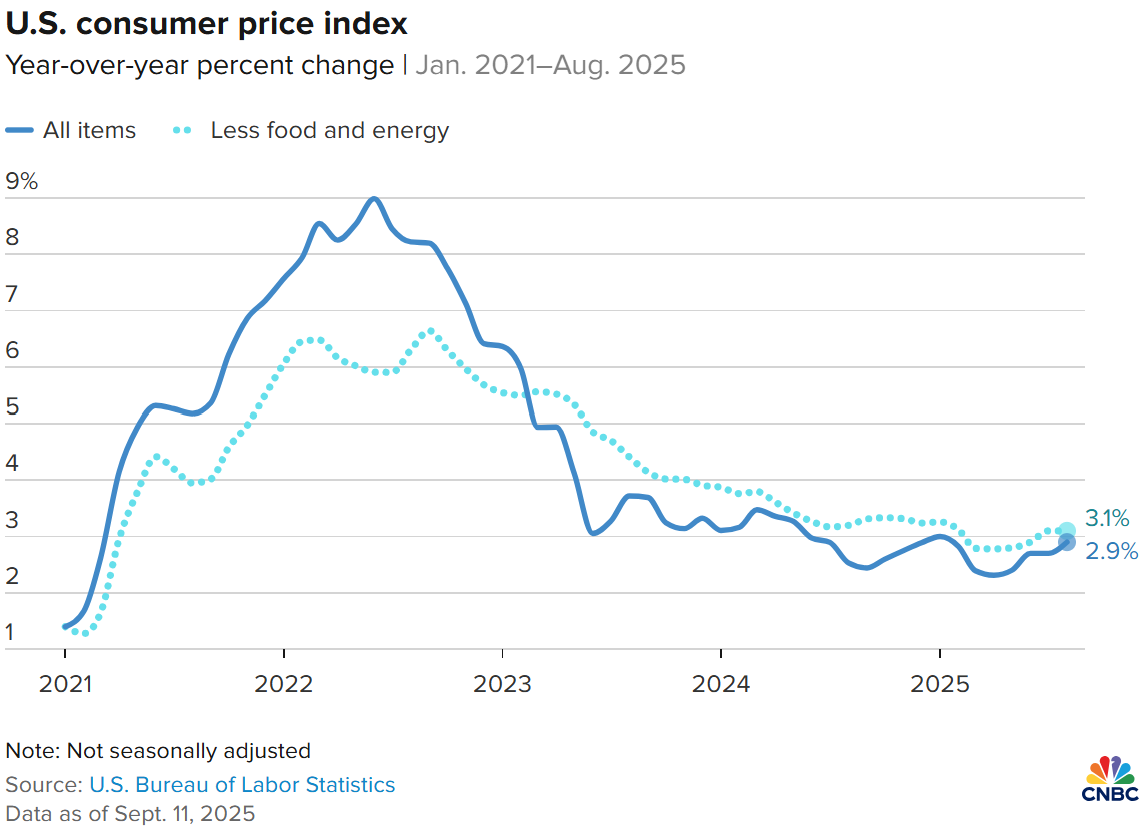
We had two significant economic developments occur this last week which illustrate how complex the Fed's job is. Remember, the Fed has been given two mandates: keep inflation low, and keep the labor market healthy. First, we had August's inflation report, which showed inflation rose slightly more than expectations. Core inflation (which measures inflation excluding food and energy prices) rose to 3.11%, up from 3.05% in July. The Fed's target for inflation is 2%, so we're a bit higher than that and moving in the wrong direction. To combat inflation accelerating, the Fed has raised interest rates hoping to cool the economy off.
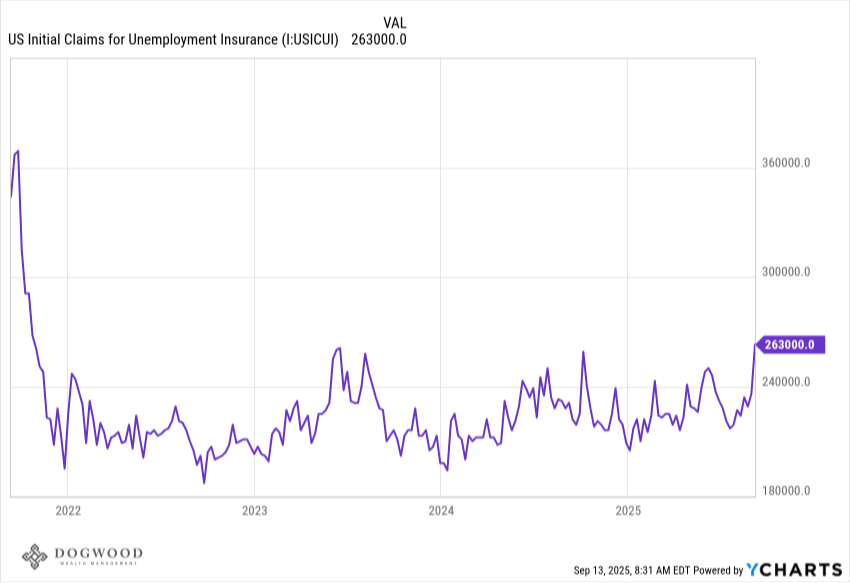
Here's where things get tricky. This week, claims for unemployment insurance reached their highest level since late 2021 when the after effects of the pandemic economic reset were still being dealt with. This report gets released weekly, and can show a real-time glimpse into the health of the labor market. Over the last few months, we've seen job growth grind to a slow creep, but the unemployment rate has been relatively low (currently at 4.3%, up from 4.1% one year ago). In the past, the Fed has used its tool kit (monetary policy in the form of interest rate cuts) in order to give a shot of adrenaline to the labor market in times of weakness. This time, however, cutting interest rates may be counterproductive to it's first mandate of keeping inflation low. While both of the Fed's responsibilities are considered equally important, calls for rate cuts are loud and clear, with the market pricing in greater than a 90% chance of a cut just 4 days from now when the Federal Open Market Committee meets.
Markets
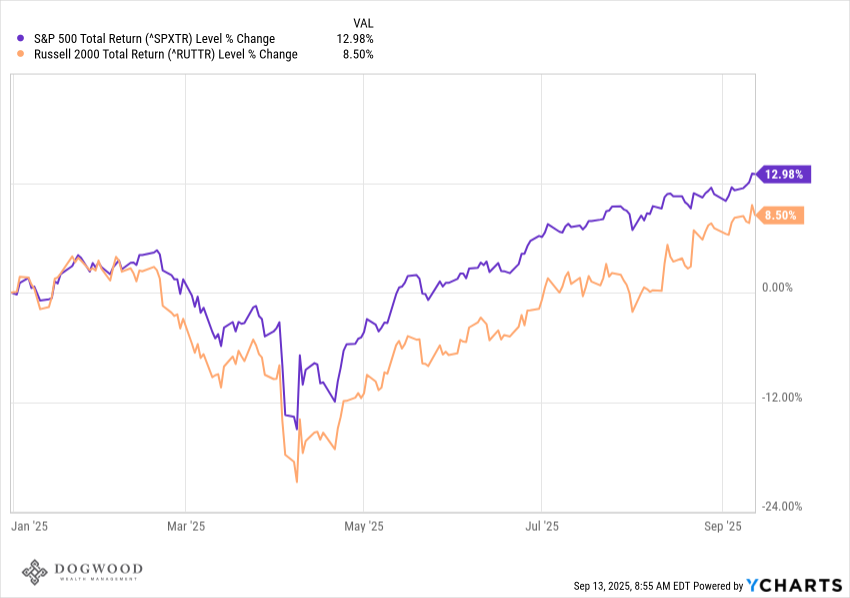
The S&P 500 was just 0.05% on Friday from an immaculate week of new all-time highs every day. For the week, the index rose 1.59% as the market looked ahead to the Fed's decision on September 17. We've seen a broadening rally in stocks with participation extending to smaller companies, as evidenced by the Russell 2000's outperformance of the S&P 500 since the April lows. Lower rates could lead to increased business activity and higher earnings for smaller companies if we don't have a labor market that comes apart at the seams.
What We're Reading
- How Old Is This Bull Market? Younger Than You Think- Carson Group
- Americans’ Most Valuable Asset Isn’t Stocks or a Home. It’s Social Security. - NY Times
Have a great weekend.
Dogwood Wealth Management