


Economy
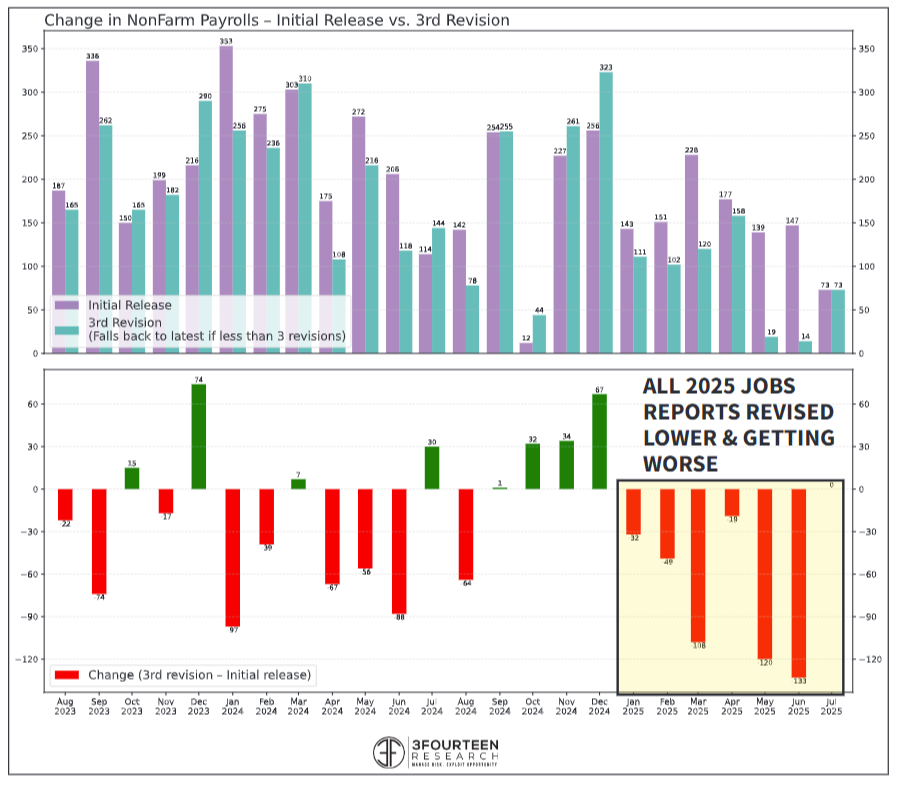
The jobs report on Friday had everybody talking, and not for good reasons. For starters, the numbers for July fell short of expectations. We added 73,000 jobs nationwide last month, shy of the estimates for 100,000. More significantly, however, was the revisions made to the previous two months. The Bureau of Labor Statistics (BLS) will put out a number, and then subsequently revise it over the next two months as they finetune additional data and surveys. When the May and June numbers were originally released, those reports showed that we had created 139,000 and 147,000 jobs, respectively. Those initial numbers were slashed with Friday's report to just 19,000 and 14,000, a reduction of more than 250,000 jobs. According to this report, the stable labor market we thought we had appears to have vanished overnight.
Also of note, two days prior to the release of the jobs report, the Fed announced its decision to leave interest rates unchanged, again citing tariffs and a possible reacceleration of inflation. The Federal Open Market Committee (FOMC) is the committee made up of 12 members of the Federal Reserve that votes on monetary policy. Last time the Fed met, all 12 voting members were in agreement to leave rates unchanged. This time, however, only 9 of the 12 voted in favor of no change, with 2 dissenting votes, and 1 abstaining. The abstaining member, Adriana Kugler, resigned from her position shortly after, paving the way for President Trump to appoint her successor months ahead of when her term was set to expire. The President has not minced words about what he wishes the Fed to do with rates, and when asked about the FOMC's vacancy, said he was "very happy." You have to wonder if some of those nine voters wish they could take that one back, knowing what we now know about the strength - or lack thereof - of the labor market.
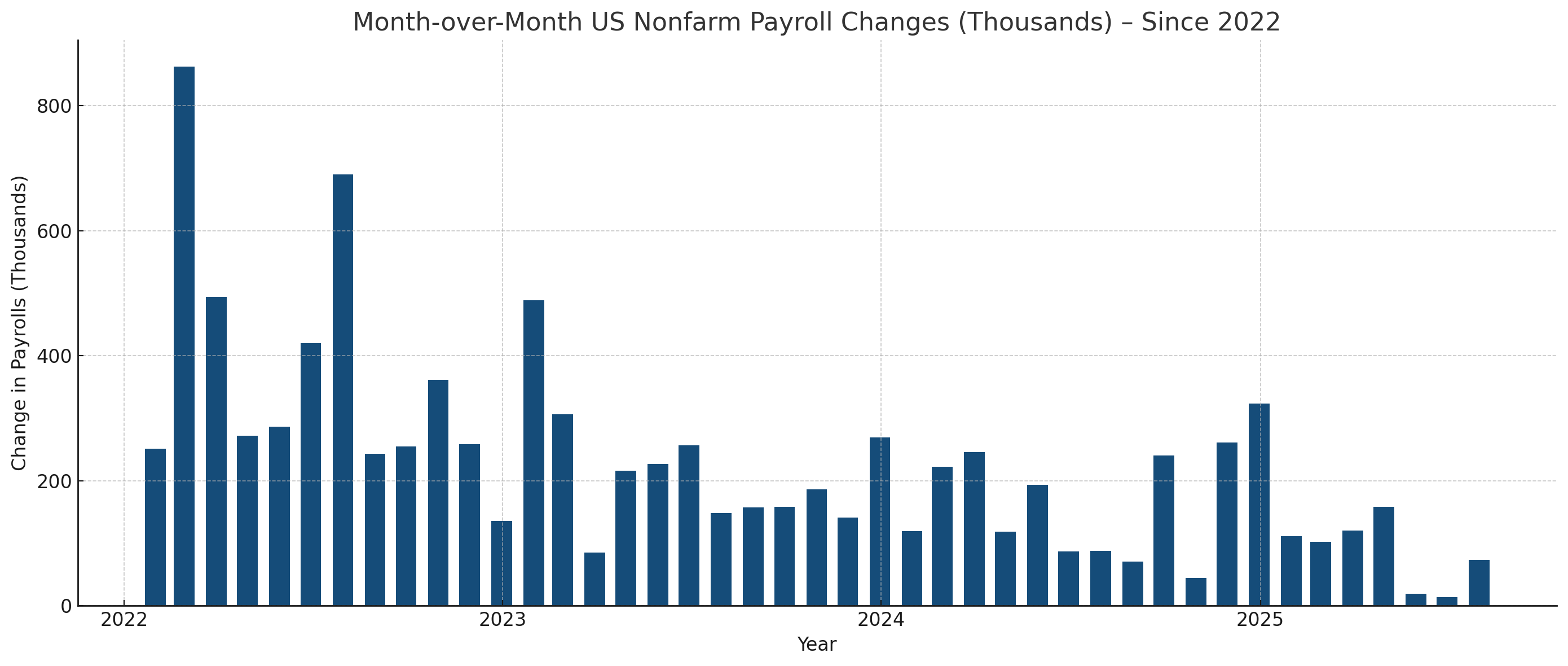
Source: BLS
Markets
The jobs report definitely took some wind out of the sails of the market this week. The S&P 500 fell 2.36% from last Friday's all-time high close. Macroeconomic data aside, it was another strong week of earnings reports with Microsoft and Meta smashing through expectations. Microsoft became the second company with a market cap of $4 trillion, joining Nvidia. FactSet reports that we're 2/3 of the way through earnings season, and more than 80% of companies that have reported have topped their expected numbers. In addition, earnings are on pace to rise by double digits for the quarter, which would be the third consecutive quarter showing double digit increases to earnings.
This week serves as a good reminder that the stock market is not the economy. Back in 2022 we had an "earnings recession" where corporate profits declined, but the broader economy never experienced a true recession. This is not to say that we think we are headed towards an imminent economic recession, but there can be periods where economic data doesn't jive with the stock market's results.
What We're Reading
- Why Jobs Numbers Were Revised Sharply Downward for June, May - WSJ
- The Best Way to Cook Bacon - Food & Wine
Have a great weekend.
Dogwood Wealth Management