


Economy
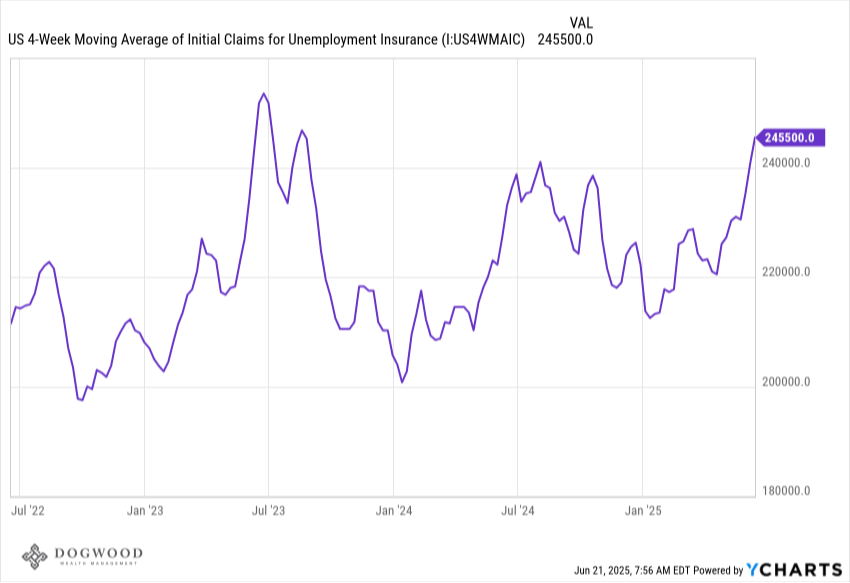
The Federal Open Market Committee (FOMC) met this week, and as expected, left interest rates unchanged. Fed Chair Jerome Powell spoke to the press to defend the Fed's decision, citing concerns about a "meaningful amount of inflation to arrive in the coming months," a likely reference to the Trump administration's tariffs. The recent data from the labor market suggests some strength, giving the Fed a bit of leeway to keep rates where they're at. The number of people who filed for unemployment insurance last week held at 245,000, down slightly from the week before. However, the 4-week average of initial claims is now at 245,500, up from 213.750 at the start of the year. In addition, the number of people who are continuing to receive unemployment insurance (meaning they have previously filed and are still without a job) remains just below a multi-year high level 1.945 million people. Despite the rising claims numbers, Powell said, "The U.S. economy has defied all kinds of forecasts for it to weaken, really over the last three years, and it’s been remarkable to see … again and again when people think it’s going to weaken out. Eventually it will, but we don’t see signs of that now." The Fed's own expectations are for two rate cuts by the end of the year, and the market is pricing in the first of those to be delivered at the September 17 FOMC meeting.
Markets
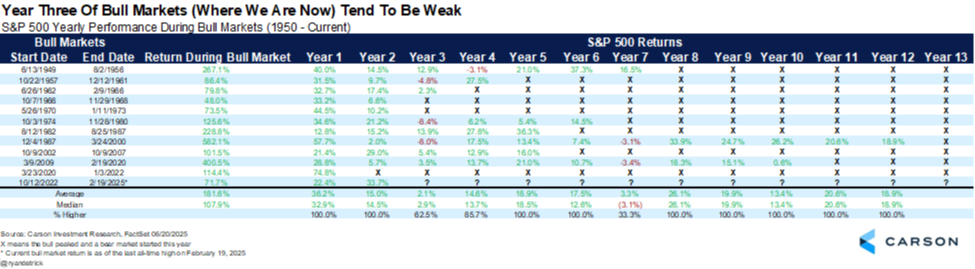
The conflict between Israel and Iran (and the potential for direct US involvement) continued to weigh on the stock market this week with the S&P 500 falling 0.15%. The index is less than 3% from the previous all-time high set back in February this year. Sam Stovall is the chief strategist at CFRA Research and said this week, "prior highs act like rusty doors and require several attempts before finally swinging open.” To add to that, on a recent podcast from Ritholtz Wealth Management, they discussed that after past bear markets, when the market recovered to within 5% of the previous high, it took more than 3 months on average to see new highs. We've now been in this range for the past 6 weeks or so where the S&P 500 got within 5% of the previous high, and we've bounced around as the market deals with uncertainty on a few fronts. Ryan Detrick of Carson has a great table (below) showing that the third year of a bull market (where we are now) has historically been a weak year, but not necessarily a sign that the run is over.
What We're Reading
- Trump’s Two-Week Pause Is a Big Gamble Iran Nuclear Crisis Will Break His Way - WSJ
- The Top 1% - Ben Carlson
Have a great weekend.
Dogwood Wealth Management