


Economy
Inflation cooled slightly more than expected in April, bringing the year-over-year rate down to 2.3%. This is the lowest inflation print we've seen since early 2021. It's also the first inflation print we've seen since the tariffs were rolled out on April 2. Despite worries that tariffs would reaccelerate inflation, inflation fell from the previous month's reading of 2.4%. Perhaps it's too early to see any inflationary impacts of the tariffs. The Federal Reserve Bank of Cleveland publishes an inflation forecast, and the latest data estimates a 0.1% increase for the month of May. How would the Federal Open Market Committee (FOMC), which controls interest rates, react if we were to see inflation sticking around 2.4%? A month ago, there was an implied probability of a rate cut at the FOMC's June 18 meeting of 60% according to the CME FedWatch Tool. Today, that's been reduced to less than 10%, which suggests Wall Street is saying 90% chance of no rate cut in June. It's not as if the inflation data has gotten worse since then, but a month ago the stock market was falling apart and sentiment was in the toilet. Since the tariffs have been put on ice, the vibes have improved, so the Fed may feel a bit of breathing room if it decides to leave rates alone for a while longer.
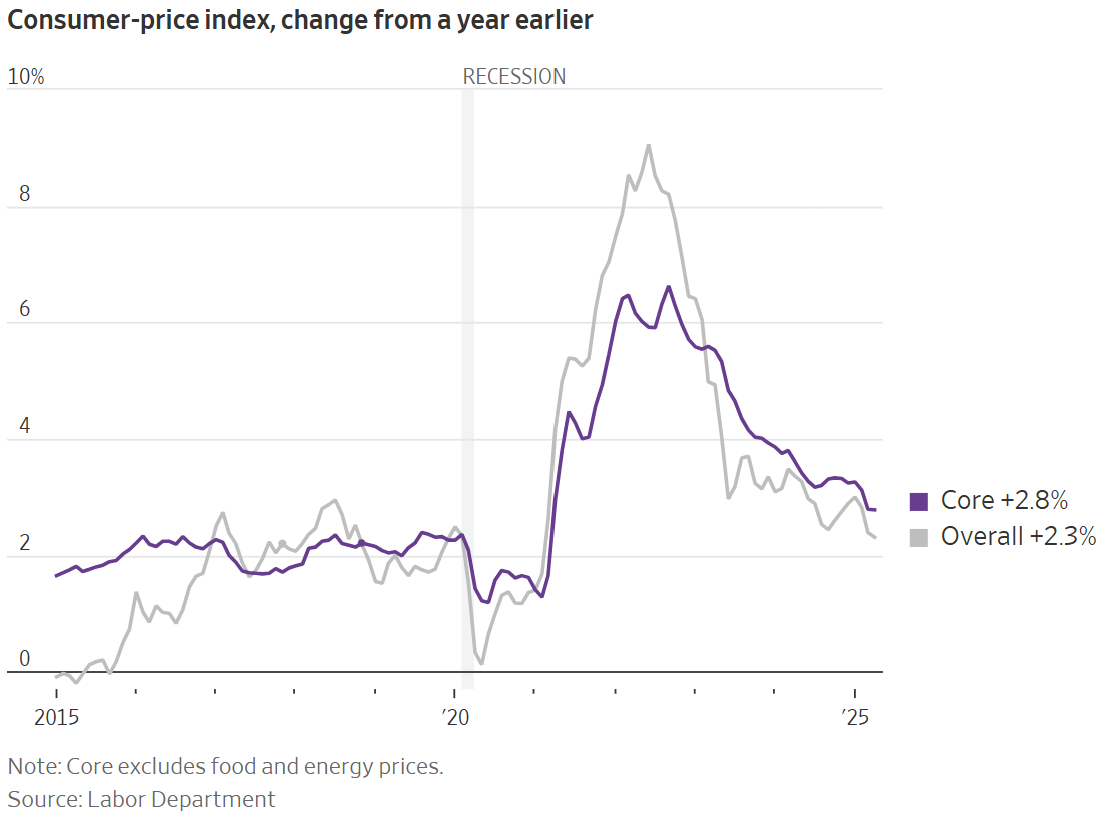
Source: WSJ
Markets
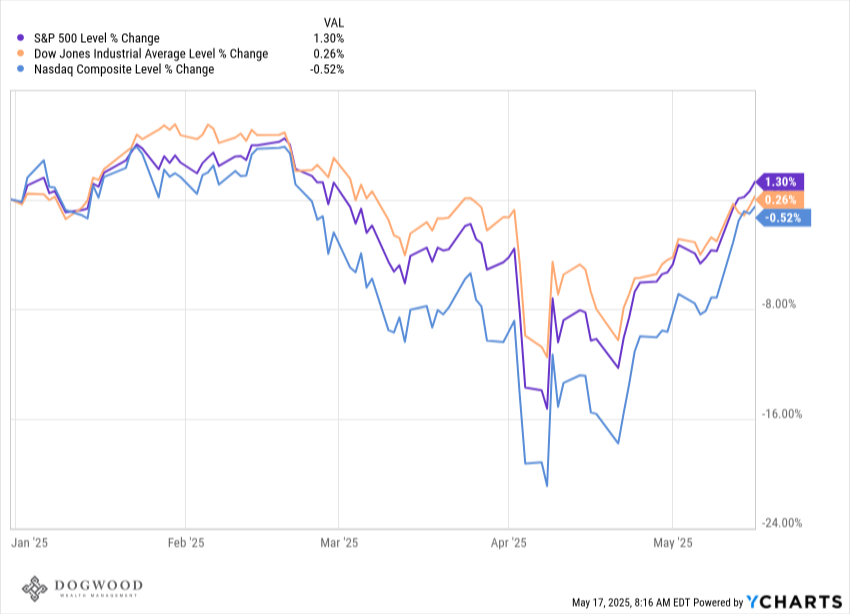
Nothing but green this week as the S&P 500 notched 5 consecutive days of gains, rising 5.27%. News broke over the weekend that Treasury Secretary Scott Bessent's trip to Geneva to negotiate a trade deal with China bore some fruit. Tariffs on Chinese imports were reduced from 145% to 30% while our two nations will continue to formalize a broader deal over the next few months. While the UK was the first trading partner to reach a deal with the Trump administration, China was the big one that Wall Street wanted to see. With the market's reaction to the news, not only is the S&P 500 higher than it was following the April 2 Rose Garden tariff announcement, it's now in positive territory for the year and just 3% off the all-time high.
The market declined 19% from mid-February through early April and has made back nearly all of the losses inside of 6 weeks. With trade-related uncertainty fading as the administration has either reached agreements, made carve outs on certain goods, or temporarily paused tariffs, the market has breathed a sigh of relief. While the tariff situation has been playing out, we are in the late innings of a Q1 earnings season that has been remarkably strong. Profits are up 13% over the last year, which has been better than expected. While companies are using the words "tariffs" and "uncertainty" on almost every corporate earnings conference call, what we aren't seeing is massive layoffs, and it's hard to have a recession when everybody is working.
What We're Reading
- A Few Questions - Morgan Housel
- Does the Cost of Insurance Threaten Homeownership? - David Champion
Have a great weekend.
Dogwood Wealth Management