


Economy
The good news: inflation slowed in February slightly more than expected. Headline inflation and core inflation came in at 2.8% and 3.1%, respectively, for the last 12 months. The expectation was for 2.9% and 3.2%, so we came in a bit under the mark. A year ago this would have likely been a big headline in the news, but inflation has taken a back seat lately to both tariffs and the labor market. On the tariff front, the back and forth continued this week, with additional tariffs on goods like Canadian aluminum and steel and European alcoholic beverages discussed.
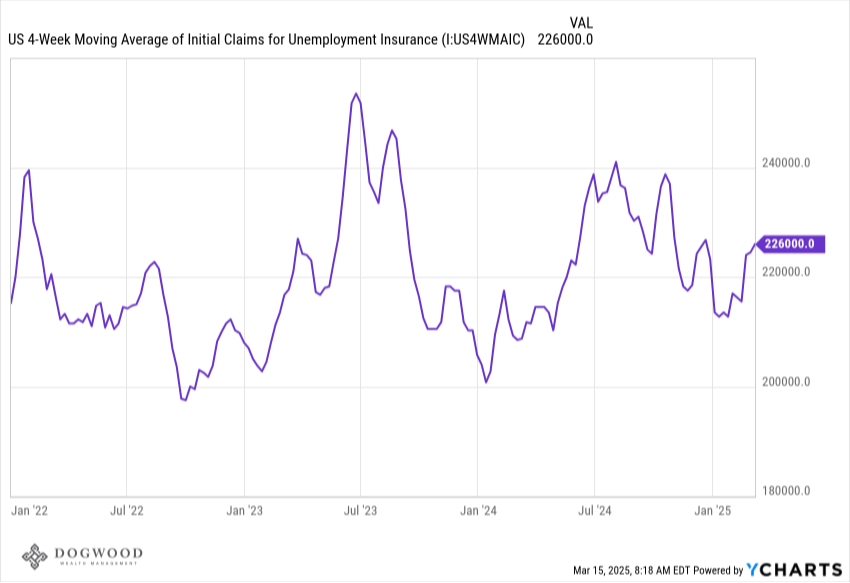
As far as the labor market is concerned, the big story developing is if, or how, the chainsaw that DOGE is taking to the federal government's spending will impact the broader economy. It's mission aims to cut wasteful spending and decrease the deficit. There are somewhere between 8 and 10 million people who either work for the federal government or work as contractors depending on government spending. In the last year, the private sector creates a little less than 200,000 jobs per month. Last month, the federal government workforce was reduced by 10,000 jobs. If, hypothetically, we start to see that number increase, and those people look for employment outside the public sector, you could see a transition period where weekly claims for unemployment insurance tick up alongside the unemployment rate. The weekly claims is a number that is released every Thursday, and could be a leading indicator as to the health of the labor market. So far, that number has remained stable.
Markets
The S&P 500 fell 2.27% this week as the tariff story continues to drag on the market. The Trump administration has been incredibly consistent in their messaging in recent weeks. Treasury Secretary Scott Bessent referred to this as a detox period for the economy that doesn't necessarily have to be a recession. Commerce Secretary Howard Lutnick said the the policies being put forth are so important that it would be worth it if we had a recession. President Donald Trump, when asked about the likelihood of recession, referred to this as a "period of transition."
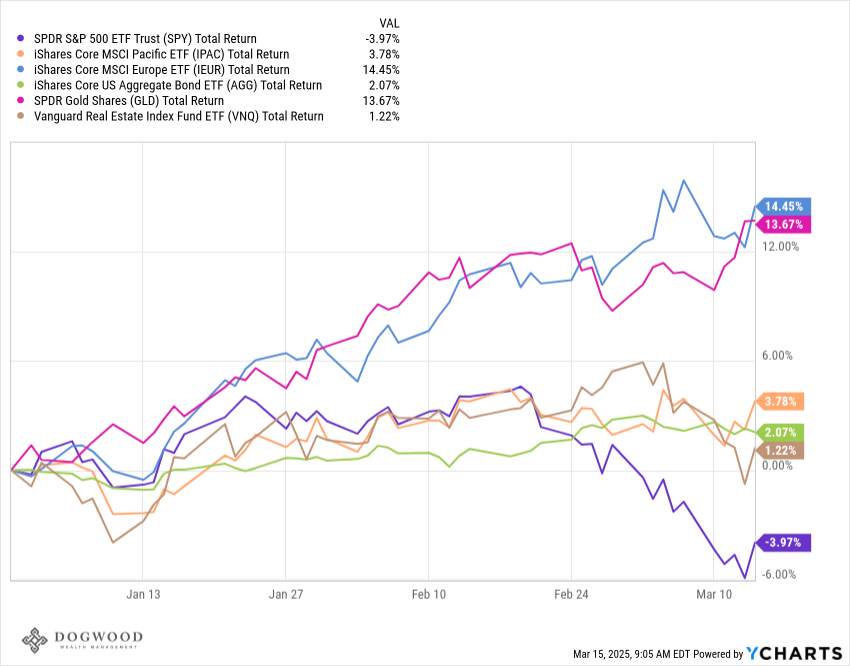
We tend to focus on the US equity market in this section of the weekly email. After all, when someone asks how the market is doing, if we were to respond with anything other than what the S&P 500 or Dow is up to, they may be left scratching their head. However, this is a perfect opportunity to look beyond our borders right now. As bad as things have been the last month or so for US stocks, it's a perfect example of why diversification still matters. European stocks are up double digits to begin 2025. Markets in Asia have also faired well. And for those of you with exposure to bonds, the selling of stocks has led to an increased demand for bonds, driving yields lower and prices higher. Alternative assets like precious metals and real estate have faired well posting gains for the first two and a half months of the year.
What We're Reading
- Eric Sheerin on the FutureProof Advisor Podcast - Matt Reiner
- Lessons Learned for Restaurants Post-Covid - Eater
Have a great weekend.
Dogwood Wealth Management