Understanding the Impact of Rising Government Debt on Markets | |||
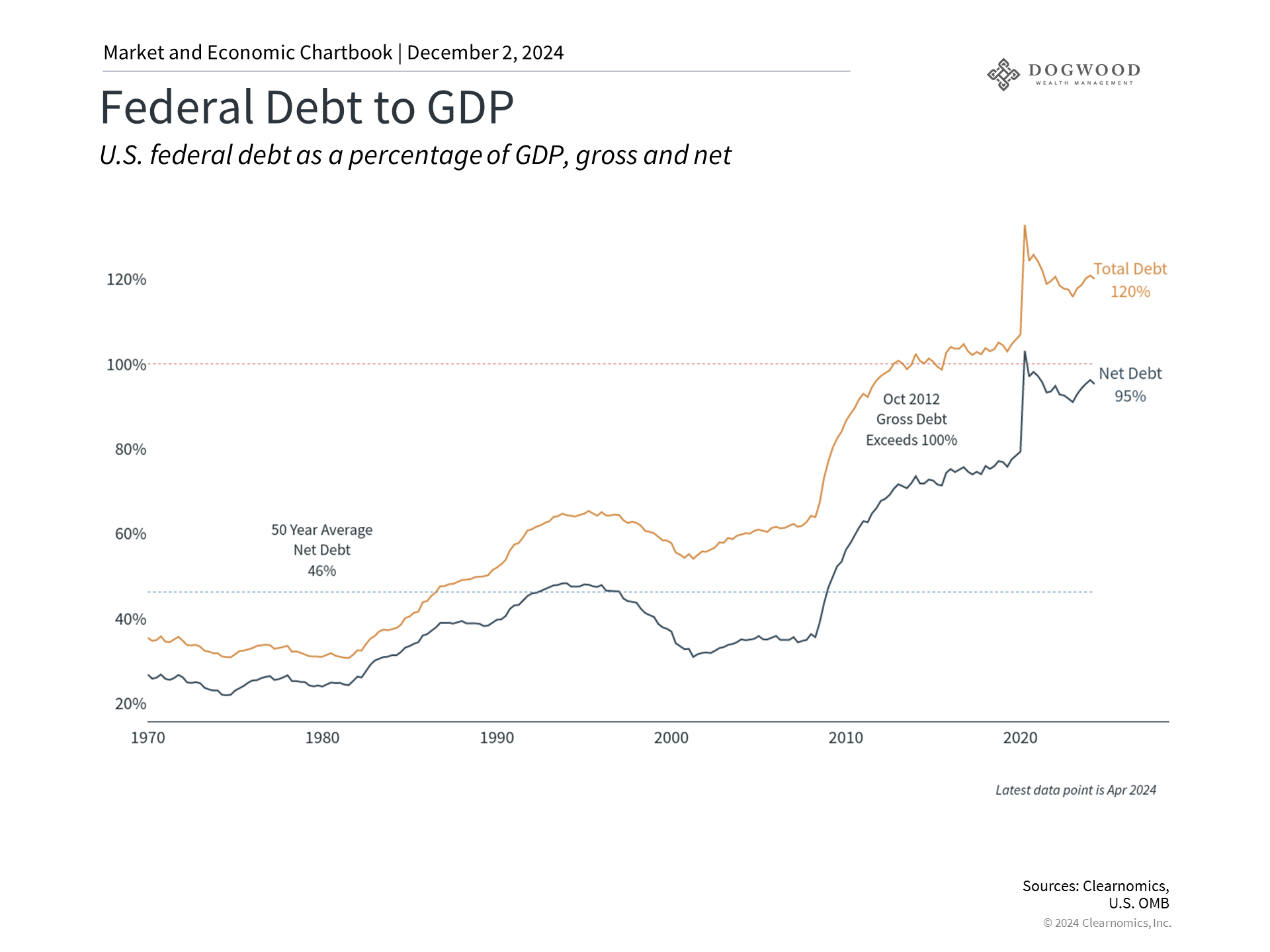
The United States Treasury reports that federal debt is nearing $36 trillion, raising concerns across economic and investment communities. Since the global financial crisis of 2008, the national debt has grown substantially, nearly quadrupling in size and continuing its upward trajectory since 2001. This significant increase has sparked ongoing discussions about fiscal policy, including debates over budget deficits, debt ceilings, and government spending measures. Following recent elections, discussions have turned to incoming administration policies and cabinet selections. The expanding national debt and its complex economic implications will remain a critical focus. What perspective should investors maintain regarding government borrowing while staying focused on long-term market fundamentals? Federal debt has seen significant expansion since the financial crisis
When analyzing the national debt situation, it's essential to separate our roles as citizens and taxpayers from our positions as investors. Many individuals naturally hold strong opinions about government fiscal policies and their generational implications. This topic will likely resurface when debt ceiling discussions resume in January 2025. While acknowledging the debt's significance, we must recognize that markets have demonstrated resilience through multiple economic cycles. The key is avoiding emotional portfolio decisions that could compromise long-term financial objectives. Evaluating the debt relative to economic output provides better context than absolute numbers. Though debt has increased dramatically, the economy has doubled since 2008. The debt-to-GDP ratio stands at 120%, though excluding intergovernmental holdings reduces this to 95%. This recent surge largely reflects pandemic-related stimulus measures. The sustainable debt threshold remains uncertain. Japan presents an example of a developed nation managing debt exceeding 250% of GDP since 2020. However, Japan's circumstances differ due to higher household savings rates offsetting government borrowing. The U.S. benefits from a more diverse economy, stronger demographic trends, and the dollar's global reserve currency status. Annual budget shortfalls contribute to mounting national debt
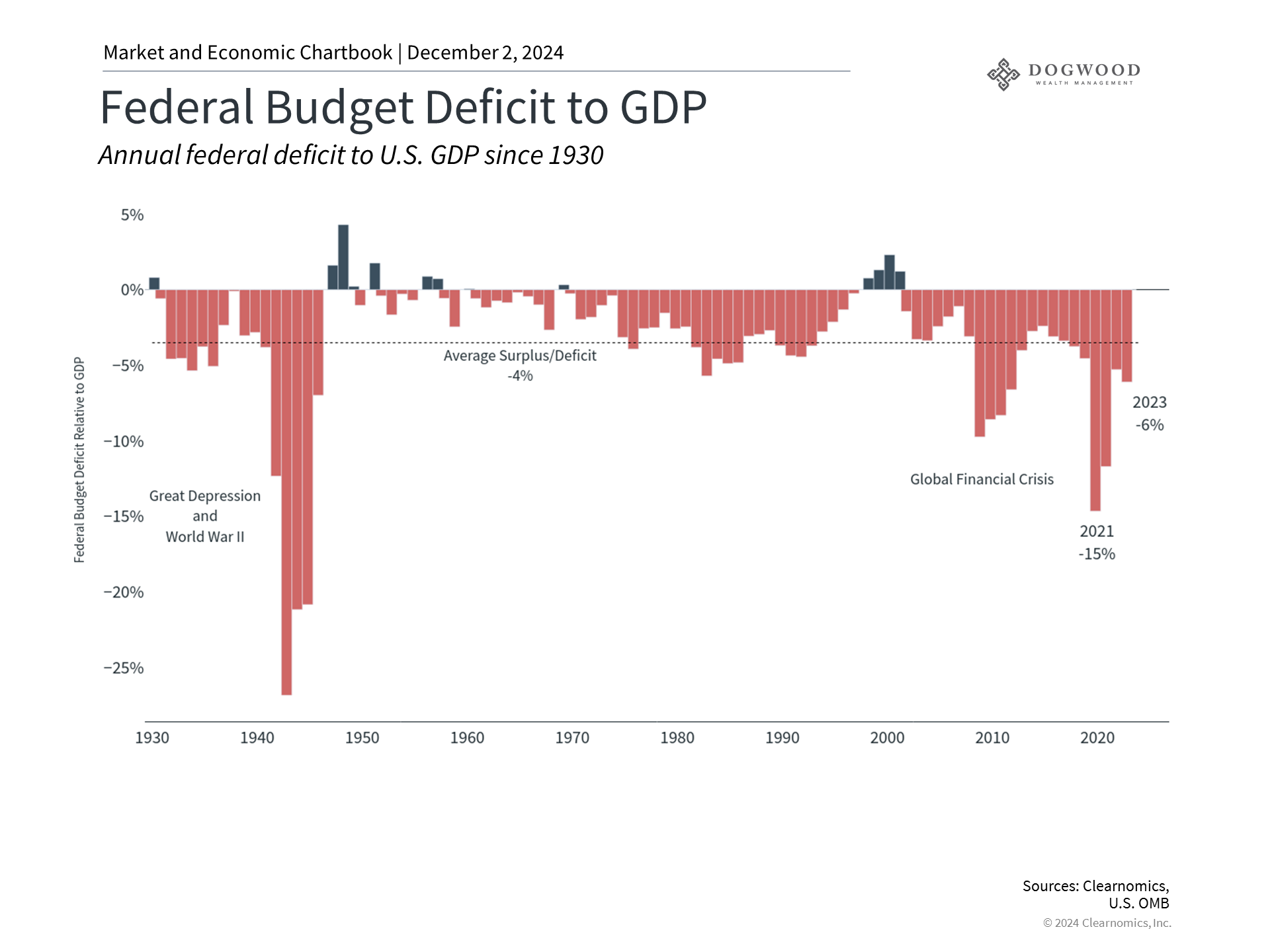
The rapid debt accumulation stems from persistent budget deficits - when government spending exceeds tax revenue. Revenue sources include individual and corporate taxes, social insurance contributions, and minor components like tariffs, which represent less than 2% of total intake. Despite growing tax revenues during economic expansion, government expenditures have increased faster, spanning both mandatory programs like Social Security and discretionary spending areas including defense and education. The government bridges this gap through Treasury security issuance, effectively borrowing from investors, institutions, and foreign entities. While the current deficit of approximately 6% of GDP is substantial, similar spending levels have occurred historically during economic downturns and wartime. Historically, deficits tend to improve with economic stabilization, though complete elimination is rare. Rising interest costs compound the debt challenge
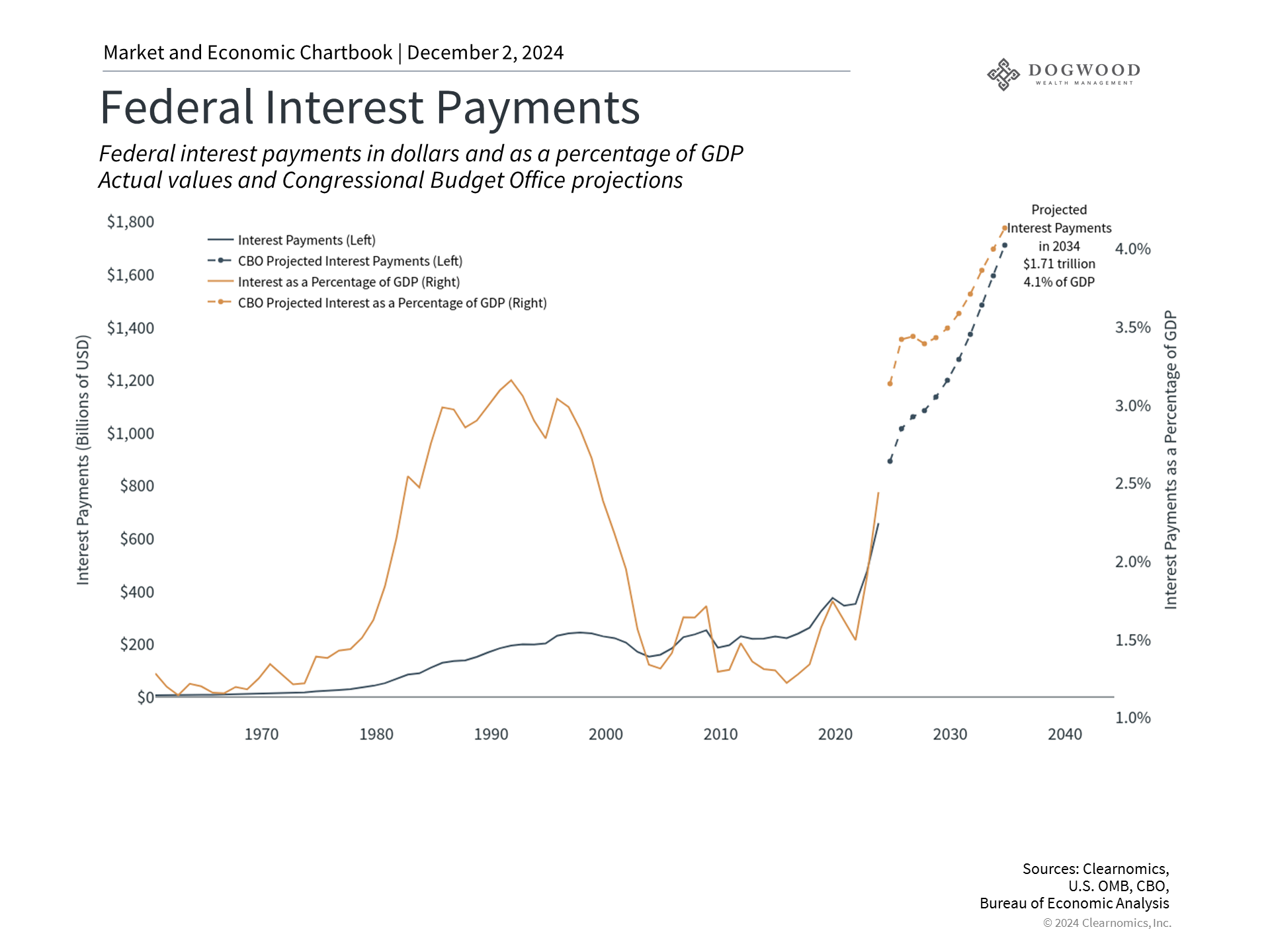
Deficit spending appears likely to continue, with limited political focus on fiscal restraint. The last balanced budgets occurred during the Clinton and Nixon administrations. Government projections indicate annual interest payments could reach $1.71 trillion within a decade. Roughly two-thirds of federal debt is held domestically by government entities and U.S. citizens. Foreign holdings include China's 2.2% share, though this has decreased. Some investors worry about reduced Treasury demand affecting debt refinancing or threatening the dollar's reserve currency status. Despite these concerns, which have persisted for decades, the U.S. remains a global safe haven during economic uncertainty. During the 2011 fiscal cliff crisis, even after a credit rating downgrade, Treasury demand increased - demonstrating their continued status as the world's preferred risk-free asset. Historical evidence shows markets have performed well across varying levels of government debt and taxation. Interestingly, periods of highest deficits - typically during economic crises - have often presented attractive investment opportunities. This reinforces the importance of maintaining long-term investment discipline regardless of fiscal policy developments. The bottom line? While the national debt presents legitimate economic concerns, investors should separate their personal views from investment decisions. Historical evidence suggests avoiding reactive portfolio changes based on fiscal developments. | |||
Dogwood Wealth Management, LLC. ("Dogwood") is a Registered Investment Advisor ("RIA") with the U.S. Securities and Exchange Commission (“SEC”). Dogwood provides investment advisory and related services for clients nationally. Dogwood will maintain all applicable registrations, notice filings, and licenses as required by the various states in which Dogwood conducts business, as applicable. Dogwood renders individualized responses to persons in a particular state only after complying with all regulatory requirements, or pursuant to an applicable state exemption or exclusion. https://www.dogwoodwealthmanagement.com/disclosure  |

Understanding the Impact of Rising Government Debt on Markets