Understanding Interest Rate Moves | |||
The Federal Reserve's interest rate moves are always a big deal for the markets. There's a lot of talk about when and how much they might cut rates, but what's more important is why they're doing it and what the whole process could look like. It's not as simple as it seems, and expectations have changed a lot over the past year. So, what do investors need to know about how rate cuts have affected the economy and markets in the past? The rationale behind Fed rate cuts is important
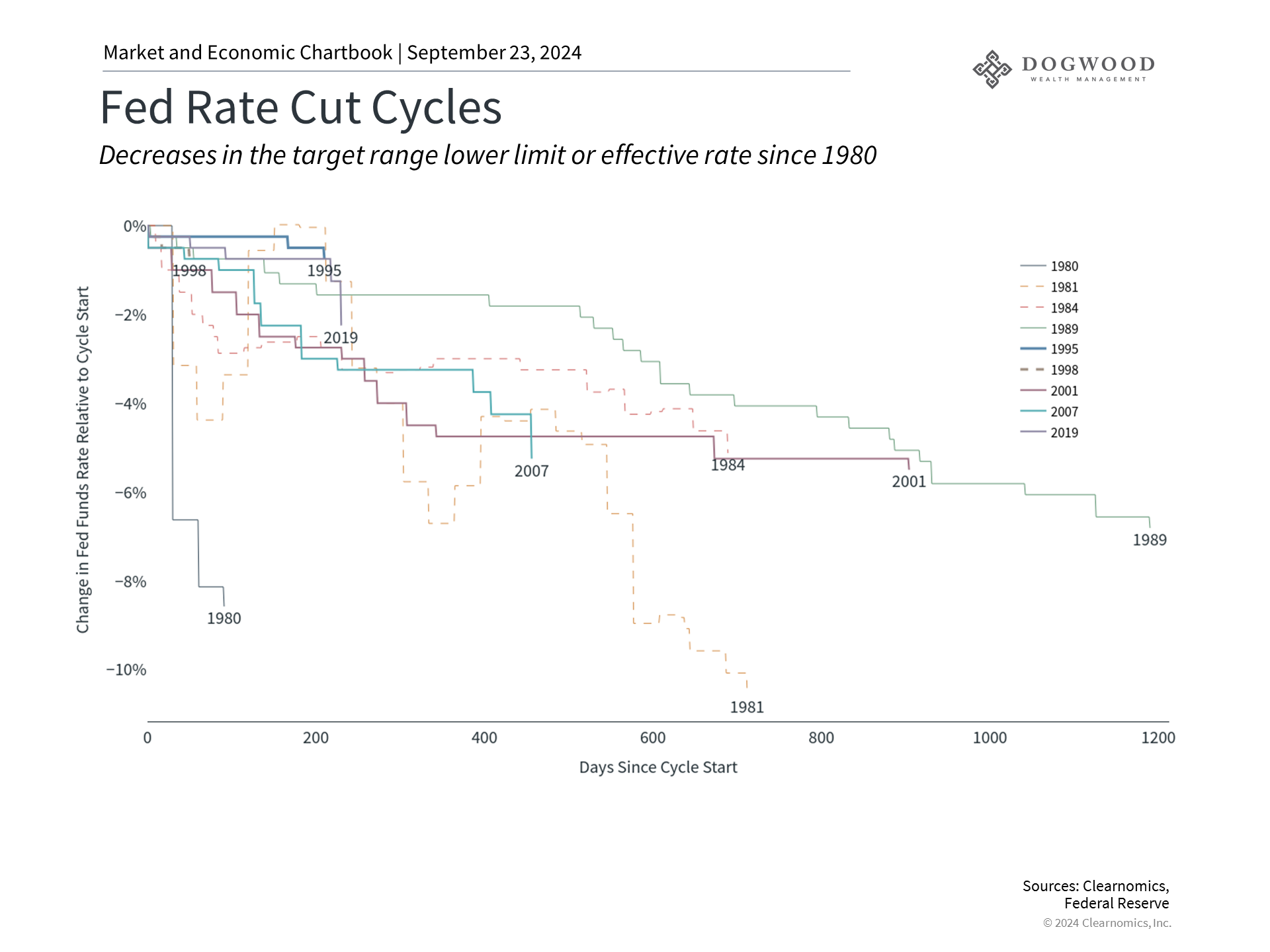
The Fed usually cuts interest rates when the economy is slowing down to make it cheaper for people and businesses to borrow money, which encourages more spending. This is supposed to help boost growth, especially during tough times like recessions. We've seen big rate cuts during events like the dotcom crash in the early 2000s, the 2008 financial crisis, and the 2020 pandemic. But it’s easy to misunderstand how the economy and markets react to rate cuts. Even though cutting rates is meant to help, when they happen during a downturn, it usually means a recession or bear market is on the way, and it can last for a while. So, while rate cuts are supposed to help, they often come as a reaction to a rough economy, not the cause of it. On the other hand, rate hikes are seen as slowing things down, but they often happen when the economy is strong and markets are doing well. So, oddly enough, rate hikes have usually lined up with solid market returns. Right now, the Fed isn’t dealing with an economic crash or crisis but is trying to manage slower growth, improving inflation, and a still-strong job market. This makes today’s situation different from times when they’ve had to cut rates in a hurry. That’s why understanding *why* they’re cutting rates now is key to figuring out what might happen with the markets. A better example to compare this to might be the 1994-1996 cycle. Back then, the Fed raised rates to fight inflation but then lowered them again without causing a recession. This is often called a "soft landing" because the Fed managed to cool things down without crashing the economy. Even though there was some market turbulence (similar to what we saw in 2022), things eventually turned around once the economy settled. The Fed’s task is to balance inflation and growth
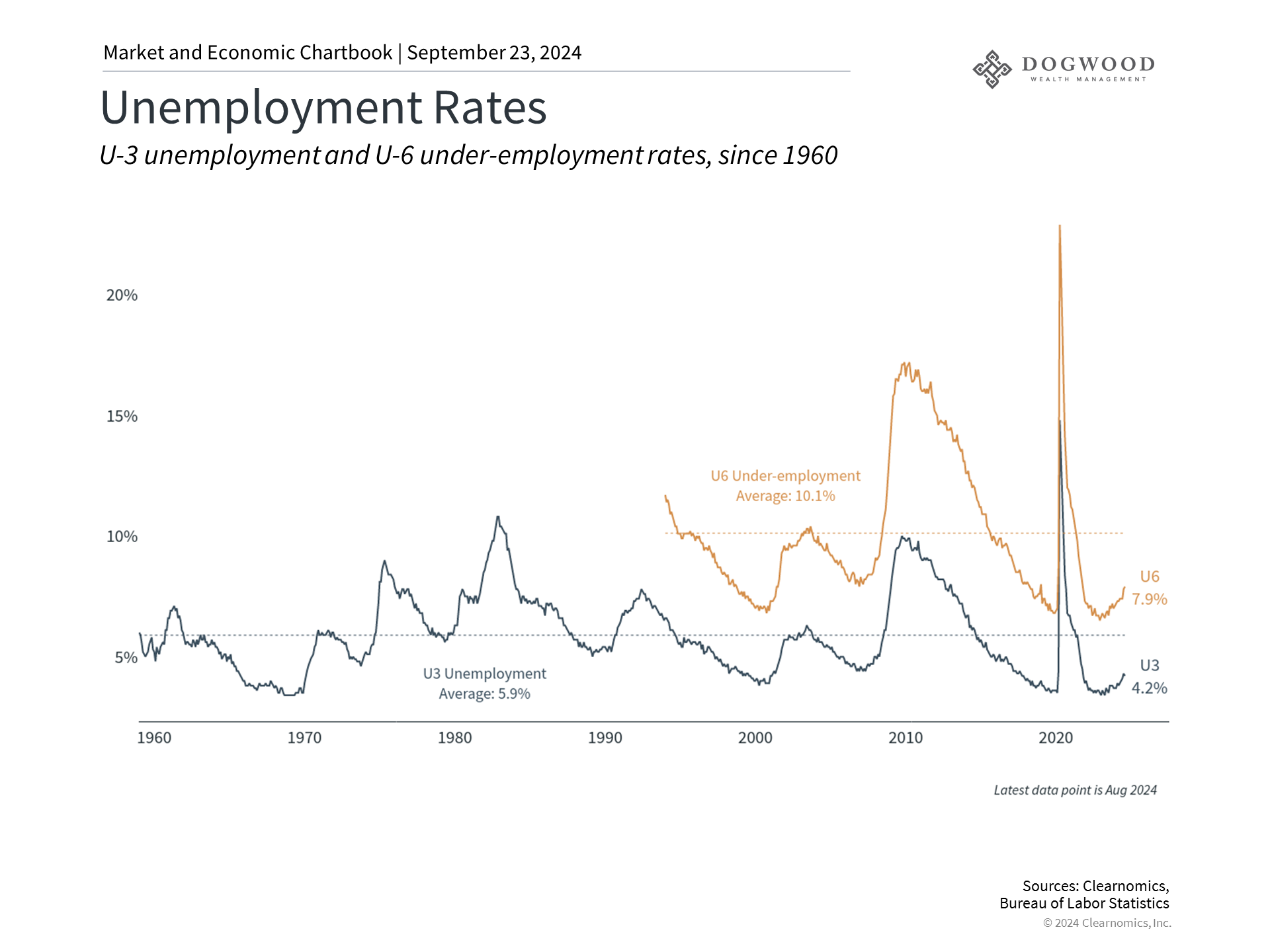
The Fed has two main goals, laid out in the 1977 Federal Reserve Act: to keep employment high and prices stable. Today, this means getting inflation back down to 2% while making sure the economy keeps growing at a steady pace. These goals can clash because, in theory, faster growth tends to push inflation higher. From 2009 to early 2020, inflation wasn’t much of a problem, so the Fed could keep interest rates super low, leading to one of the strongest job markets ever. But in the last few years, higher inflation has forced the Fed to make tough choices between keeping prices stable and protecting jobs. Luckily, inflation has been cooling down since peaking in 2022. The most recent Consumer Price Index (CPI) report showed prices were still slowly coming down in August, with the overall index up just 2.5% compared to last year. Still, the Fed isn’t ready to say it’s won the fight, especially since core CPI, which leaves out the more volatile food and energy prices, edged up to 3.2%. This bump is mostly due to housing prices, which have been stubbornly high. There’s a saying that monetary policy has “long and variable lags.” In other words, if the Fed waits for inflation to fully hit 2%, it might be too late, and they could end up tightening the job market too much, which would hurt both workers and businesses. Because of this, the recent dip in employment data could make a case for the Fed to start cutting rates soon. Bond yields are adjusting to rate cuts
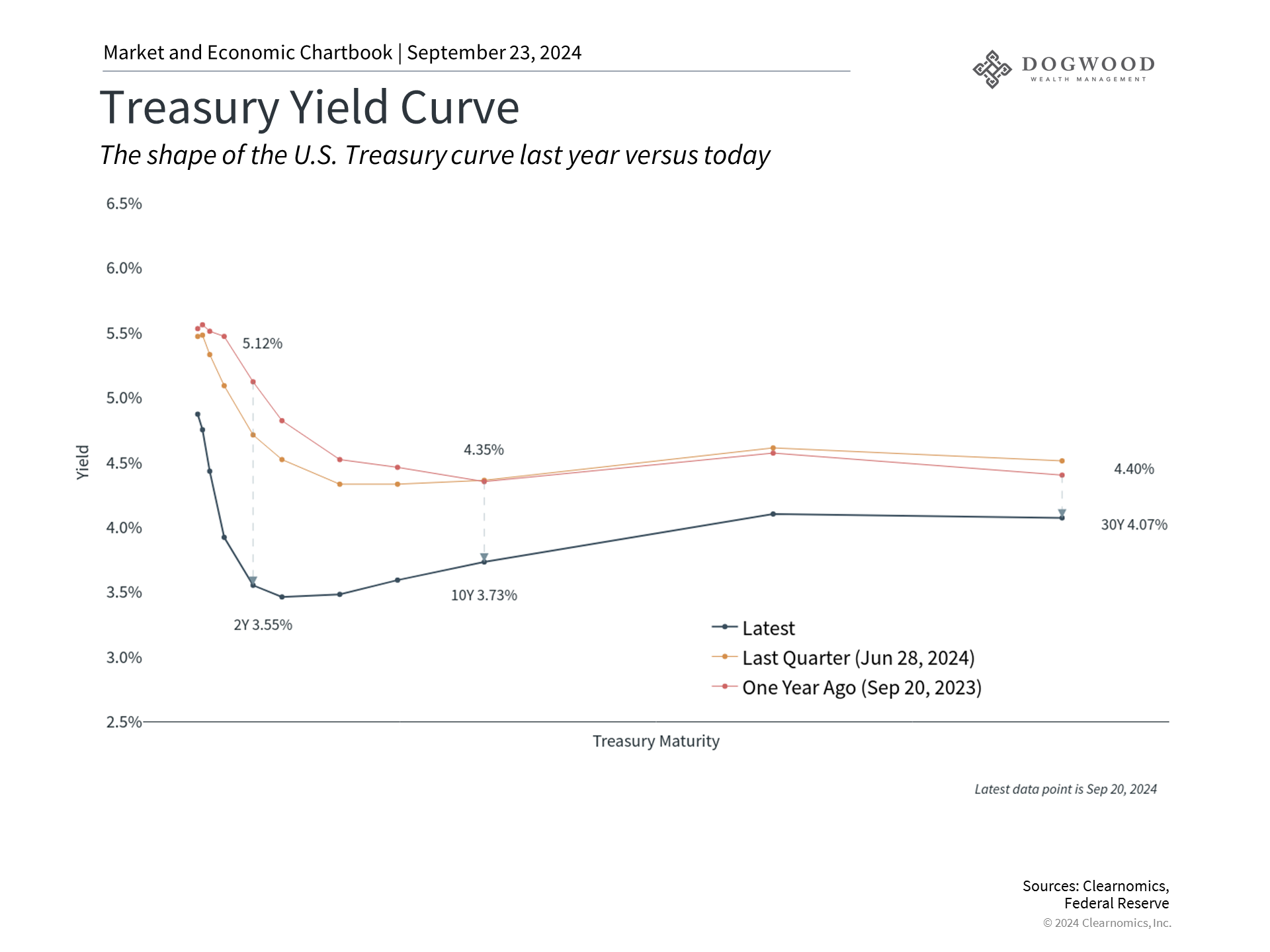
Given these trends, most economists and investors think the Fed will lower interest rates a few times this year and into 2025. Bond yields are already reacting, with the yield curve "dis-inverting" for the first time since rate hikes began in 2022. This happens because short-term rates, which follow the Fed's decisions, are starting to drop, while long-term rates, tied to economic growth, haven’t fallen as much. This creates an upward-sloping yield curve, which is generally seen as a positive sign for the economy. Although we can’t predict the future based on the past, lower rates have historically been good for both stocks and bonds. Bond prices move opposite to bond yields, which is why many bond indexes have bounced back lately. For stocks, lower rates mean businesses can borrow money more easily for growth. It also means future profits are worth more today when rates are lower, making stocks look more attractive. Of course, markets don’t rise smoothly, so there will likely be some volatility as the economy adjusts to the Fed’s moves. As we enter this new phase of monetary policy, economists will keep a close eye on things like employment and growth. The Fed’s challenge will be to lower rates just enough to support the economy without causing inflation to flare up again or creating other financial problems. The bottom line? Understanding *why* the Fed is cutting rates is key. Instead of focusing on each rate cut, it’s better for investors to think long-term and stay focused on their financial goals. | |||
Dogwood Wealth Management, LLC. ("Dogwood") is a Registered Investment Advisor ("RIA") with the U.S. Securities and Exchange Commission (“SEC”). Dogwood provides investment advisory and related services for clients nationally. Dogwood will maintain all applicable registrations, notice filings, and licenses as required by the various states in which Dogwood conducts business, as applicable. Dogwood renders individualized responses to persons in a particular state only after complying with all regulatory requirements, or pursuant to an applicable state exemption or exclusion. |

Understanding Interest Rate Moves