With less than two months to go until the presidential election, the plans from President Donald Trump and Vice President Kamala Harris are starting to take shape. Through speeches and debates, both are explaining their positions and how they would change current policies. For investors, taxes are a big focus, with some worried about how new tax rates might affect both Wall Street and everyday businesses. As November 5 approaches, how can investors keep things in perspective? It’s important to maintain perspective this election season
Tax policy can be pretty complicated, so it's always smart to work with someone you trust. And even though the election is coming up soon, both candidates’ tax plans could still change. While we can’t go over every detail here, a lot of the differences in their tax proposals center around the future of the Tax Cuts and Jobs Act (TCJA). Before getting into the specifics, it’s important to remember that tax policy can get heated because of politics. Taxes are tied to the political divide, and no matter which side you're on, it’s important to stay level-headed so you can keep your financial goals in focus. While taxes directly affect households and businesses, they don’t always have a clear impact on the overall economy or stock market. Taxes are just one factor—deductions, credits, and strategies can lower actual tax rates, and people often adjust how they spend and invest based on taxes. So, lower taxes don’t always mean an economic boom, and higher taxes don’t necessarily lead to a downturn. Also, keep in mind that what candidates promise during the election doesn’t always match up with what actually happens once they're in office. They often make big claims that don’t fully pan out. Even after someone wins, they still need Congress to pass any new tax laws, which can change or soften their original ideas. Plus, presidents tend to lose seats in Congress during their second term, making it harder to push big changes through. Take the 2016 election, for example—President Trump promised to completely overhaul the tax system. The TCJA was a big shift, but it kept a lot of old rules too. Similarly, in 2020, President Biden criticized the TCJA and talked about raising taxes on high earners and corporations. While the Inflation Reduction Act of 2022 did introduce a 15% minimum corporate tax, it wasn’t as big a change as what was talked about during the campaign. The future of the Tax Cuts and Jobs Act and national debt is uncertain
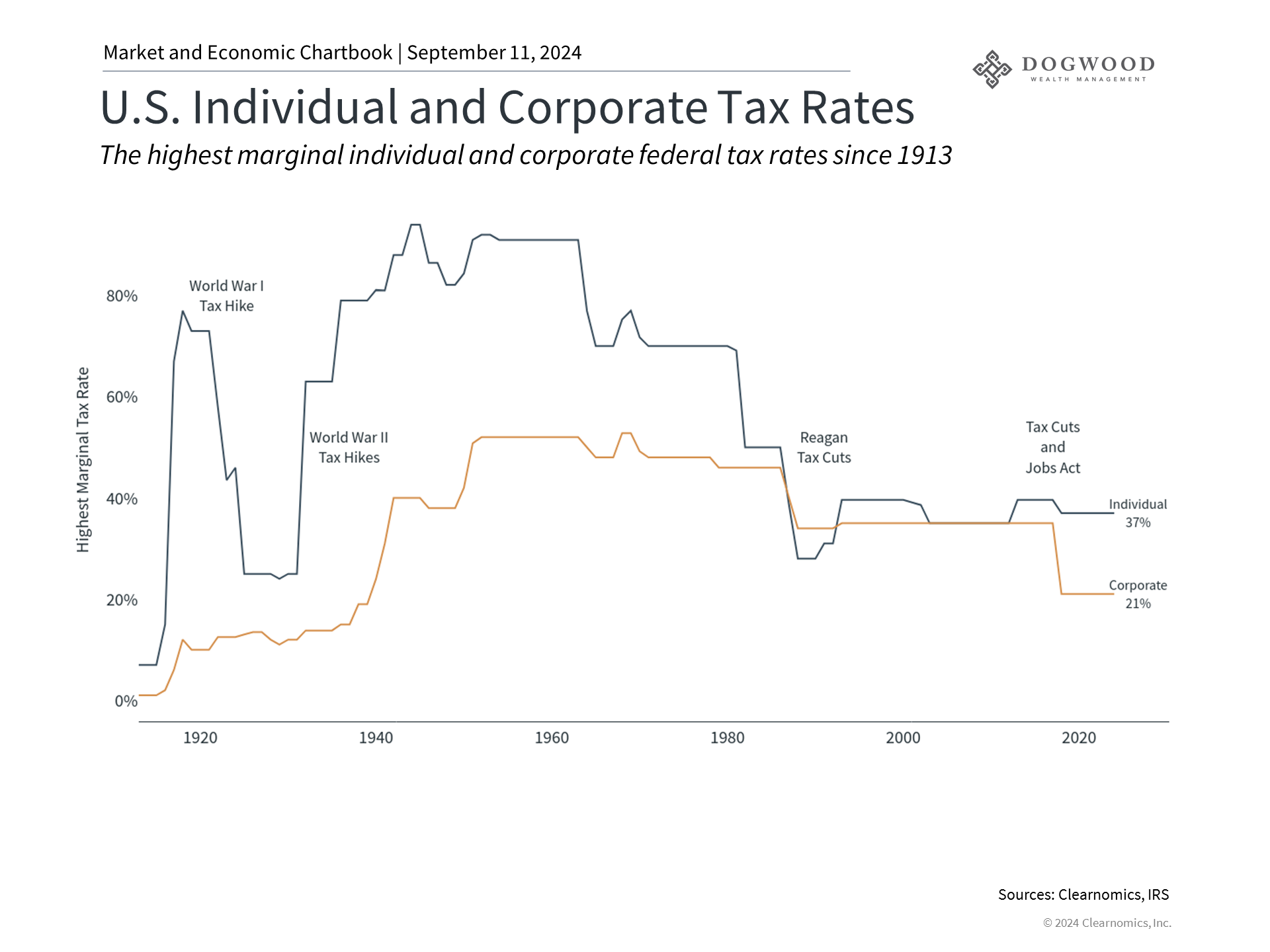
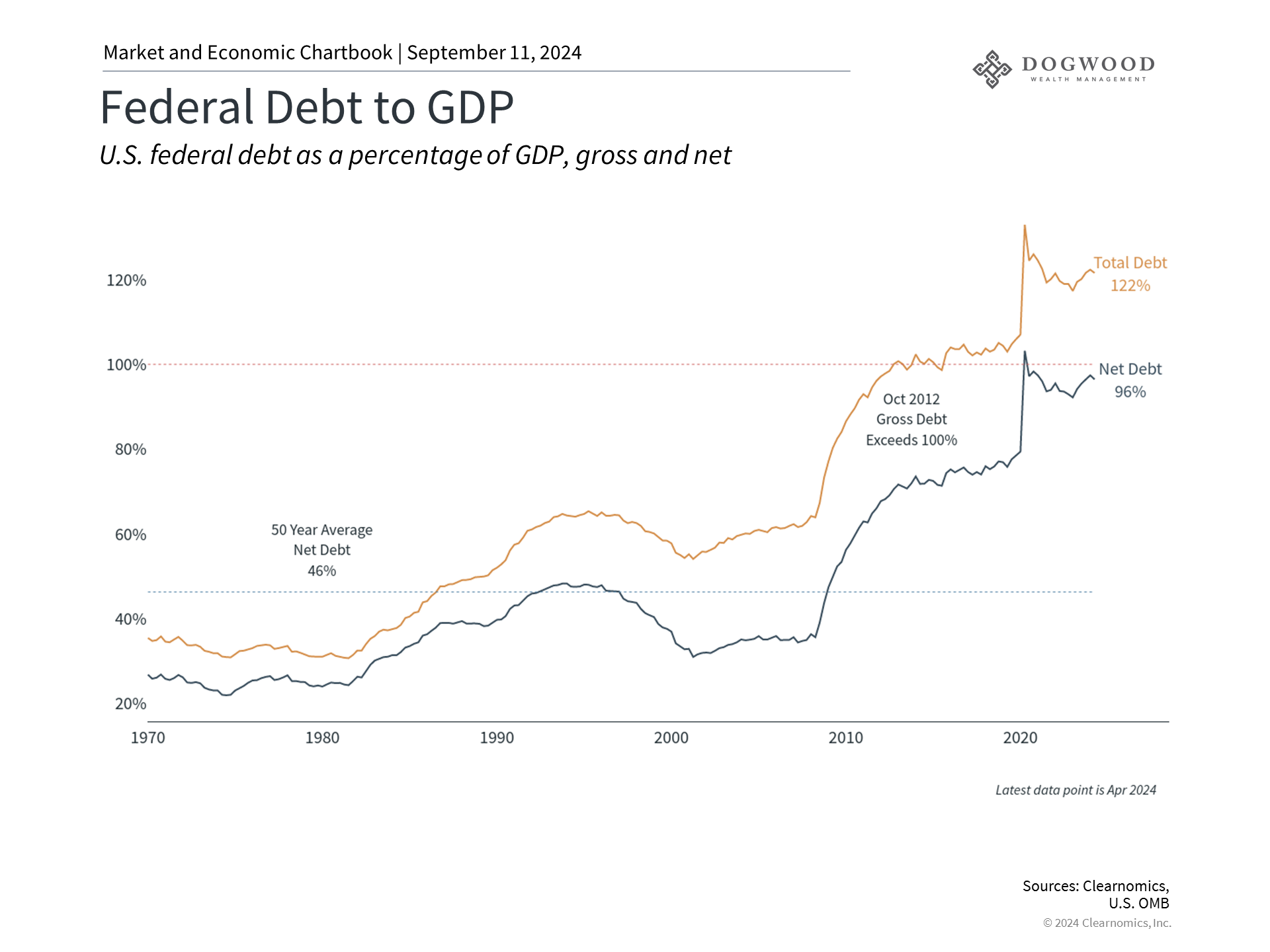
For decades, tax rates have been pretty low compared to historical standards. Even if things don’t change in the next presidential term, a lot of economists are worried that taxes might have to go up eventually to deal with the growing federal debt. The TCJA (Tax Cuts and Jobs Act) came into play in 2018. It lowered individual income tax rates, with the top rate dropping from 39.6% to 37%. It also nearly doubled the standard deduction, cut the corporate tax rate from 35% to 21%, and switched to a territorial tax system for companies. On top of that, the TCJA lowered estate taxes, got rid of personal exemptions, and tweaked other deductions and credits. In 2022, the Inflation Reduction Act introduced a 15% minimum tax for big corporations making over $1 billion a year. It also added a 1% excise tax on stock buybacks for publicly traded companies. If Congress and the president don’t step in, a lot of the TCJA’s changes will expire in 2026, which could lead to a “tax cliff.” This makes taxes a hot topic for this election season. Here’s a rundown of what the candidates are talking about: - Trump is pushing to lower corporate taxes from 21% to 15% for some companies, like manufacturers that produce domestically. Harris, on the other hand, supports raising the corporate tax rate to 28%, in line with Biden’s plan. - Trump has mentioned extending the TCJA’s individual tax rates, though the details are still unclear. Harris wants to bring the top tax rate back to 39.6%. - Harris is in favor of raising the capital gains tax from 20% to 28%. With the increase in the “net investment income tax” from the Affordable Care Act, the top capital gains rate would hit 33%, the highest since 1978. - Both candidates propose enhanced child tax credits and no taxes on tips. Trump has also talked about scrapping Social Security taxes for seniors. - Harris wants to increase the startup expense deduction from $5,000 to $50,000 and provide $25,000 to help first-time homebuyers with down payments. - Harris also supports a new tax on unrealized capital gains for people worth $100 million or more, which would be a historic move. This idea recently came up in the Supreme Court’s Moore v. United States case, which okayed a one-time tax on unrepatriated foreign earnings as part of the TCJA. The economy has grown under both parties
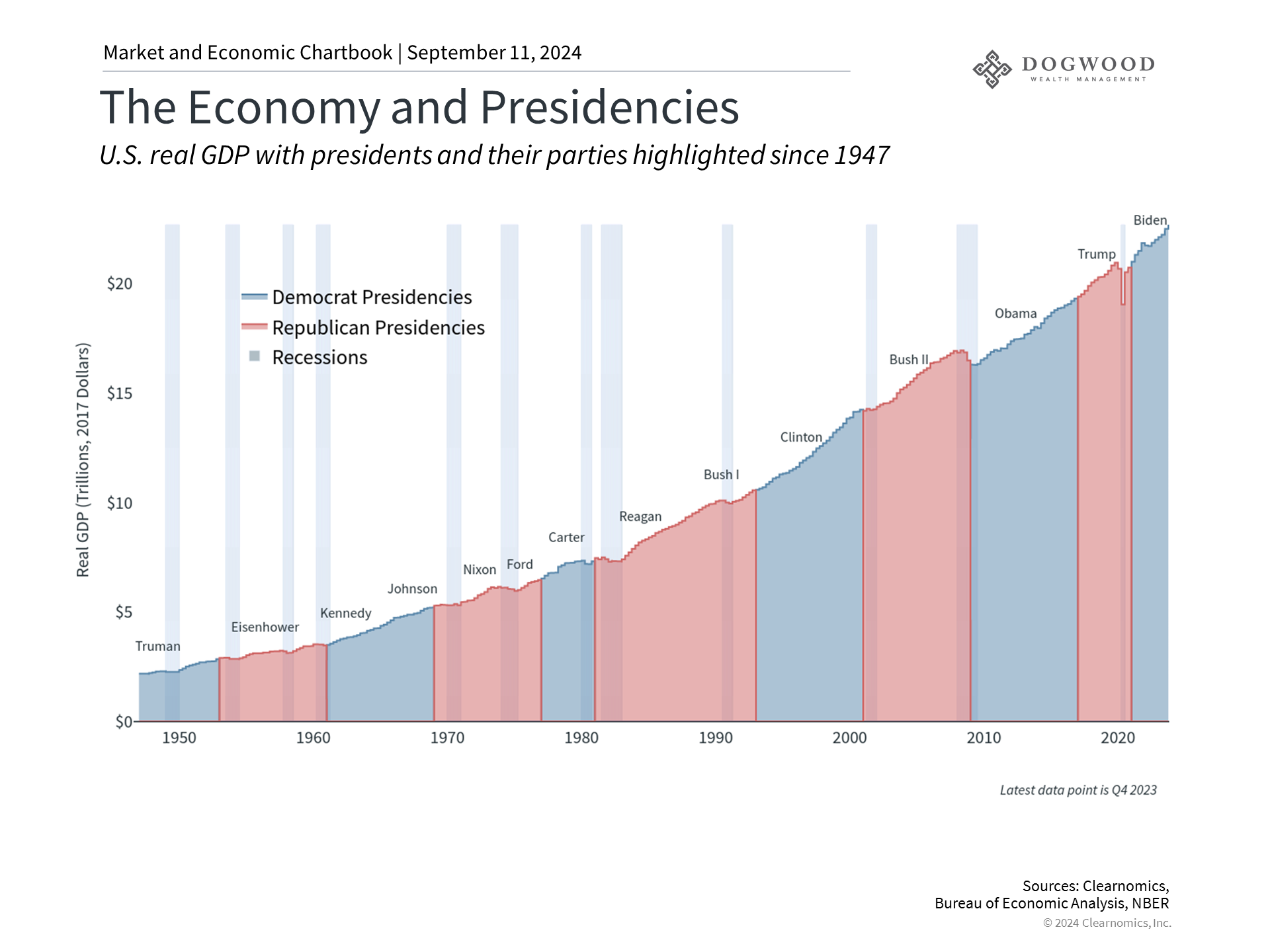
The annual budget deficit is still high, and the national debt is likely to keep growing no matter who’s in the White House. While studies on this vary and should be taken with a grain of salt, many suggest that either candidate could add trillions to the debt in the coming years. But remember, the economy has grown under both parties over the years. It’s worth noting that who’s in the White House isn’t the biggest factor for the economy and markets, even though it might seem that way. Policy changes usually happen slowly due to the checks and balances in our system. And neither candidate is talking about bringing back the super high tax rates from before the Reagan era, when the top rate was as high as 94%. So, while taxes are important for financial plans, they don’t always affect investment portfolios and economic growth the way some might think. Investors should keep working with a trusted advisor and stick to their long-term goals during this election season. By keeping a balanced perspective and avoiding decisions driven by political hype, investors can set themselves up for success in a changing political landscape. In short, as the election heats up, it’s crucial for investors to stay grounded despite all the political noise and differing economic proposals from the candidates. While Trump and Harris may suggest changes to the tax code, it’s important to stay objective when planning your finances. | |||
Dogwood Wealth Management, LLC. ("Dogwood") is a Registered Investment Advisor ("RIA") with the U.S. Securities and Exchange Commission (“SEC”). Dogwood provides investment advisory and related services for clients nationally. Dogwood will maintain all applicable registrations, notice filings, and licenses as required by the various states in which Dogwood conducts business, as applicable. Dogwood renders individualized responses to persons in a particular state only after complying with all regulatory requirements, or pursuant to an applicable state exemption or exclusion. |

Taxes, the Election, and What It Means for Investors