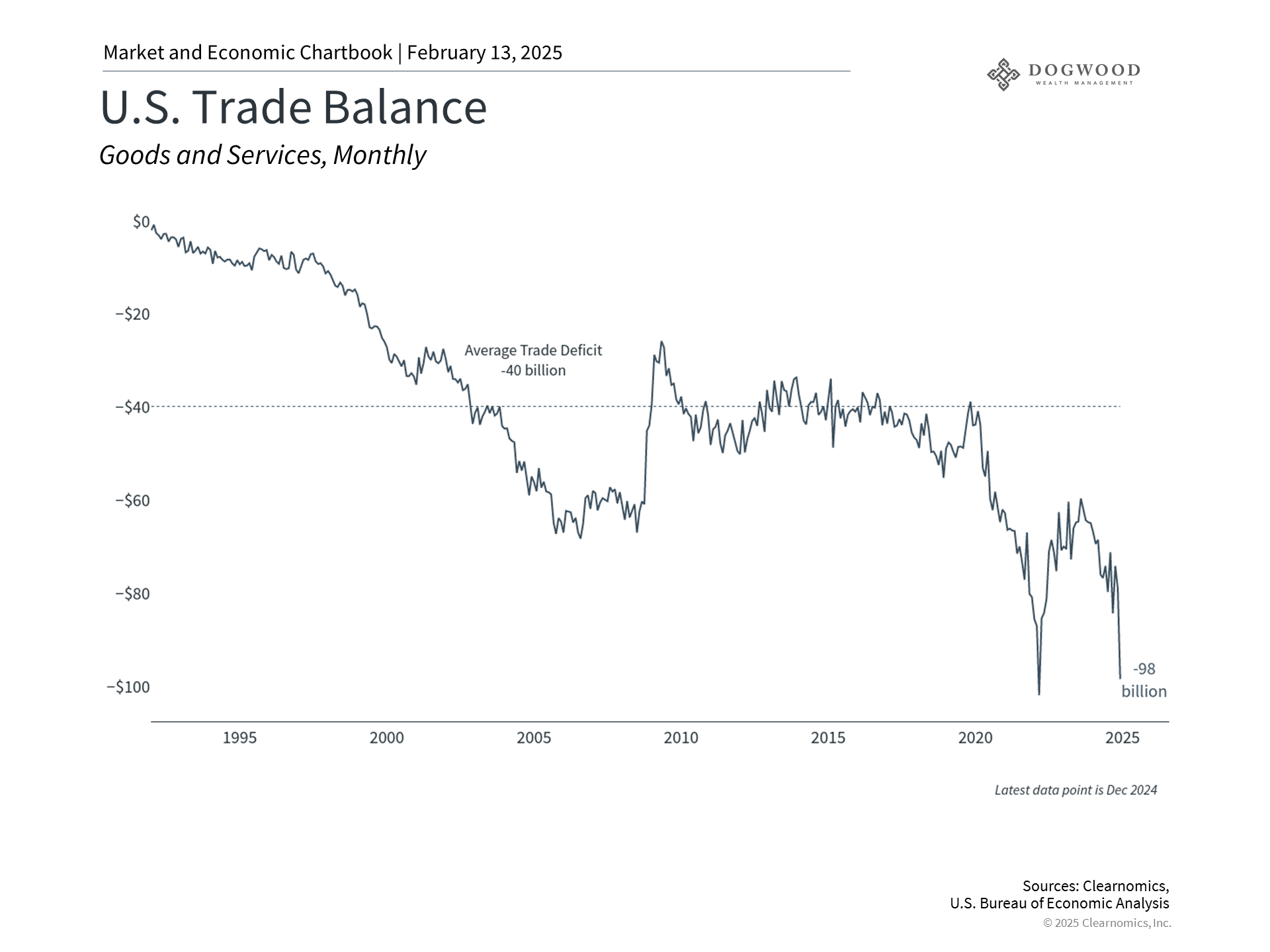
Investors have encountered multiple market concerns early this year, including tech stocks, interest rates, and government policies. Among these, trade policy has stood out as particularly impactful. President Trump has introduced various trade measures, such as tariffs on Canada, Mexico, China, and the European Union. How should investors respond to these developments? The U.S. runs a significant trade deficit
For long-term investors, maintaining perspective as the situation evolves and staying focused on controllable factors is crucial. Recent events have demonstrated how rapidly headlines can shift, and tariff threats are not guarantees of enactment. The Trump administration has multiple objectives for imposing tariffs beyond protecting American industries. Tariffs are also used as negotiation tools with other countries to enforce border control, prevent illegal drug influx, and raise government revenue. The U.S. has a long history of using tariffs to protect domestic industries, a concept known as protectionism, dating back to the Industrial Revolution when tariffs supported American manufacturing. Later, the McKinley Tariff of 1890 raised import duties to nearly 50% on many goods, one of the highest rates in U.S. history. The Smoot-Hawley Tariffs of 1930, which are thought to have worsened the Great Depression, serve as a cautionary tale for slowing global trade. These historical experiences led to decades of more open trade, including the establishment of international trade organizations. In theory, free trade works well when each country specializes in what it does best, benefiting all nations. While this fueled global economic growth, it also displaced American workers as manufacturing shifted to countries with lower labor costs. In many ways, the pendulum has swung back toward protectionist policies, with President Trump's renewed focus on using tariffs as a key policy tool, similar to his first administration. The U.S. operates with a significant trade deficit, importing far more than it exports. Recent trade actions include a new 25% tariff on steel and aluminum that could apply to all trading partners, reciprocal tariffs on countries that impose duties on American goods, postponed tariffs on Canada and Mexico, and additional tariffs on China. China's countermeasures include new 15% tariffs on energy imports and 10% on various U.S. industrial and agricultural products, echoing the 2018-2019 trade disputes. This escalating pattern has sparked concerns of an emerging 'trade war.' The role and importance of tariffs have changed over time
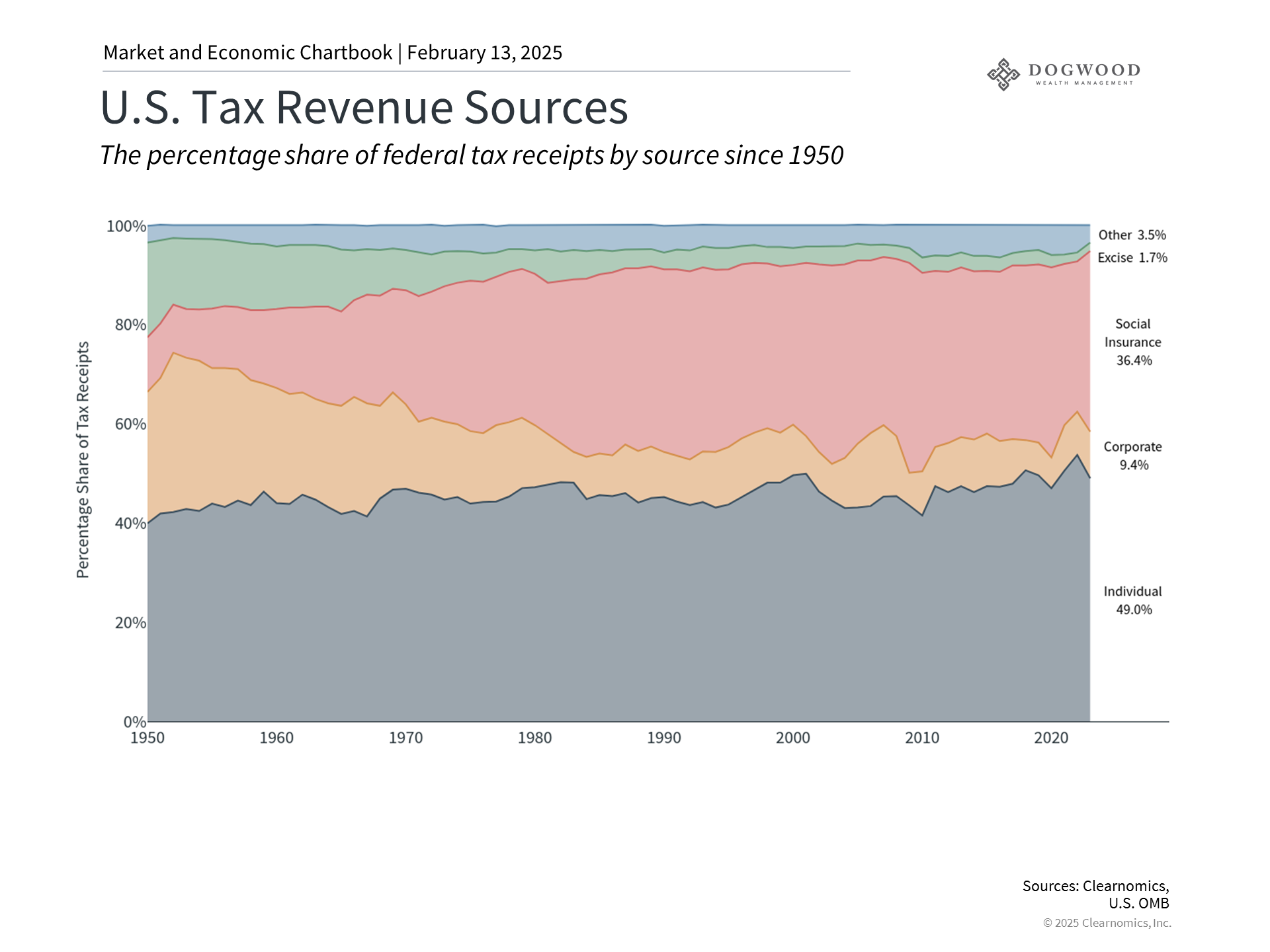
Market reactions to tariff announcements often appear more dramatic than their actual economic impact. During Trump's first term, the markets generated healthy returns despite fears of trade wars. The trade disputes of 2018 and 2019 did not have the severe global consequences many had anticipated. Tariffs were used as negotiating tools, resulting in agreements such as the United States-Mexico-Canada Agreement (USMCA) and a trade deal with China. In the chart above, tariffs fall under the 'Other' category and contribute only 1% to 2% of total government revenue, highlighting their relative insignificance compared to taxes. However, many politicians and economists advocate for an improved trade balance, which could strengthen domestic manufacturing, increase employment in export-oriented industries, and reduce reliance on foreign borrowing. On the flip side, the trade deficit reflects the underlying strength of the U.S. economy and consumer purchasing power. When Americans have more disposable income, they can afford to buy more imported goods, leading to a larger trade deficit. Additionally, the deficit is partially offset by significant capital inflows into U.S. markets, as foreign investors seek the stability and opportunities offered by American assets. This investment helps fund innovation, business expansion, and domestic job creation. The dollar has strengthened since the election
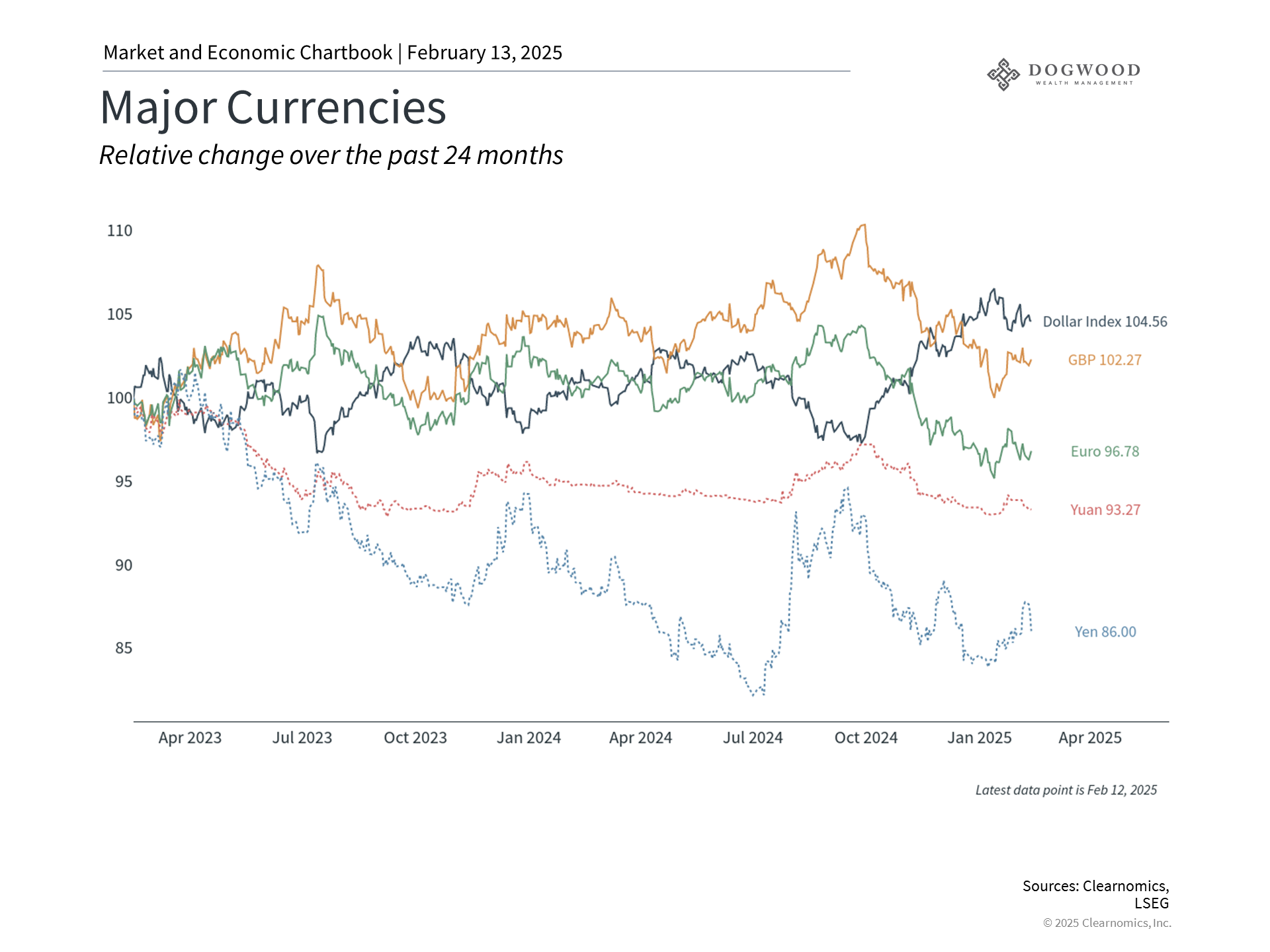
Trade concerns have strengthened the dollar since last year’s presidential election. This is due to the fundamental link between trade and currencies. Importing foreign goods involves selling dollars to purchase other currencies, so reducing these imports boosts the dollar's strength. The chart above shows that the dollar has appreciated against many major currencies over the past several months. Another impact of tariffs is their potential effect on consumer prices and inflation. When tariffs are imposed on imported goods, businesses often pass these additional costs on to consumers in the form of higher prices. This inflationary pressure is particularly noticeable in sectors heavily reliant on international trade, such as consumer electronics, automobiles, and household goods. Therefore, it’s important for investors to keep these developments in perspective. Tariffs have multiple objectives, not all of which should affect financial markets in the long run. While they can cause financial uncertainty, impact the U.S. dollar, and potentially lead to higher consumer prices, past episodes also show that markets can perform well despite these concerns. The bottom line? While trade and tariffs are important for the global economy, history shows that their effects on financial markets are often overstated. Investors should continue to focus on their long-term financial goals and not overreact to short-term headlines. | |||
Dogwood Wealth Management, LLC. ("Dogwood") is a Registered Investment Advisor ("RIA") with the U.S. Securities and Exchange Commission (“SEC”). Dogwood provides investment advisory and related services for clients nationally. Dogwood will maintain all applicable registrations, notice filings, and licenses as required by the various states in which Dogwood conducts business, as applicable. Dogwood renders individualized responses to persons in a particular state only after complying with all regulatory requirements, or pursuant to an applicable state exemption or exclusion.  |

Tariffs and Trade Wars: What Long-Term Investors Should Know