 | |||
Analyzing Market Corrections in the Context of Trade PolicyApril 2, 2025 | |||
Recent market turbulence driven by trade policy concerns has pushed major indices toward correction territory, leaving many investors feeling trapped in a cycle of uncertainty. The technology sector has been particularly impacted by these developments, leading some to question when markets might find stable footing. However, maintaining a long-term perspective is crucial during these challenging periods. Market cycles, much like natural seasons, include both periods of growth and decline. While market corrections can feel seemingly endless - like a harsh winter - history demonstrates that these periods typically resolve themselves as conditions improve. Though current trade policy concerns present unique challenges, past experience suggests markets could stabilize once there is more policy clarity. Historical data shows market recoveries often come unexpectedly
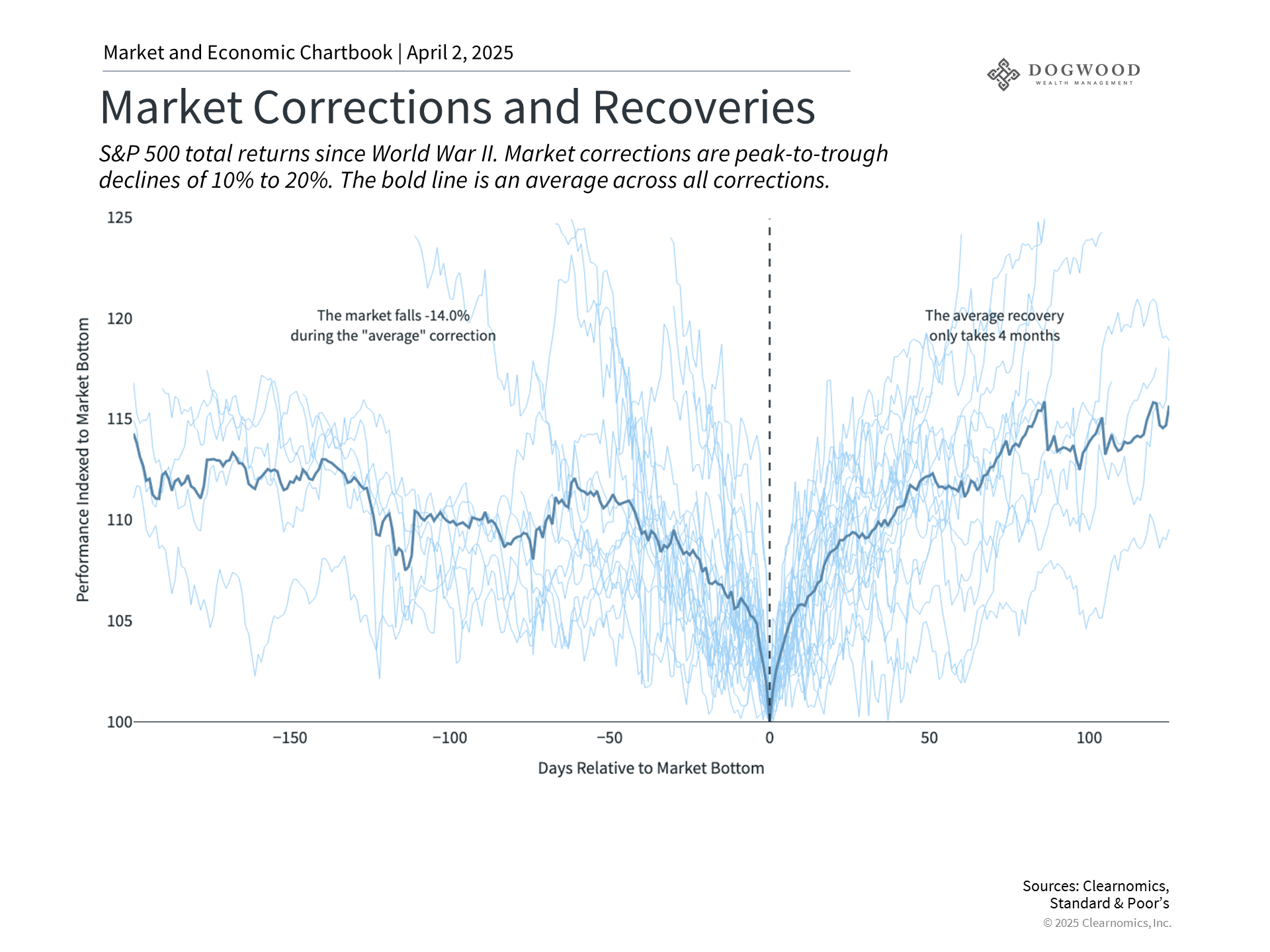
Currently, the S&P 500 is approaching correction levels, traditionally defined as a 10% decline from recent highs, while the Nasdaq has already been in correction territory for several weeks.1 Recent economic uncertainty has triggered significant market volatility, with major indices experiencing daily swings of one to two percentage points. A common market observation notes that upward movements tend to be gradual while downward moves are often sharp and sudden - like taking stairs up but an elevator down. This pattern has been evident in recent market activity. However, it's worth noting that even after corrections, market levels tend to remain above previous cycle peaks. This suggests that markets generally climb several floors before experiencing a correction of one or two levels. This context is particularly relevant today, as the current S&P 500 correction is measured against February's record high. From a broader perspective, current market levels approximate those seen last September. While uncomfortable, this helps frame recent market movements more appropriately. The chart illustrates that market corrections are regular occurrences, with an average decline of 14.3% since World War II. Despite this pattern, markets have historically recovered within months, often rebounding when least anticipated. Recent examples include the recoveries following the pandemic in mid-2020, the technology-driven bear market in late 2022, the banking sector concerns in early 2023, and numerous other instances. Market timing strategies often prove ineffective
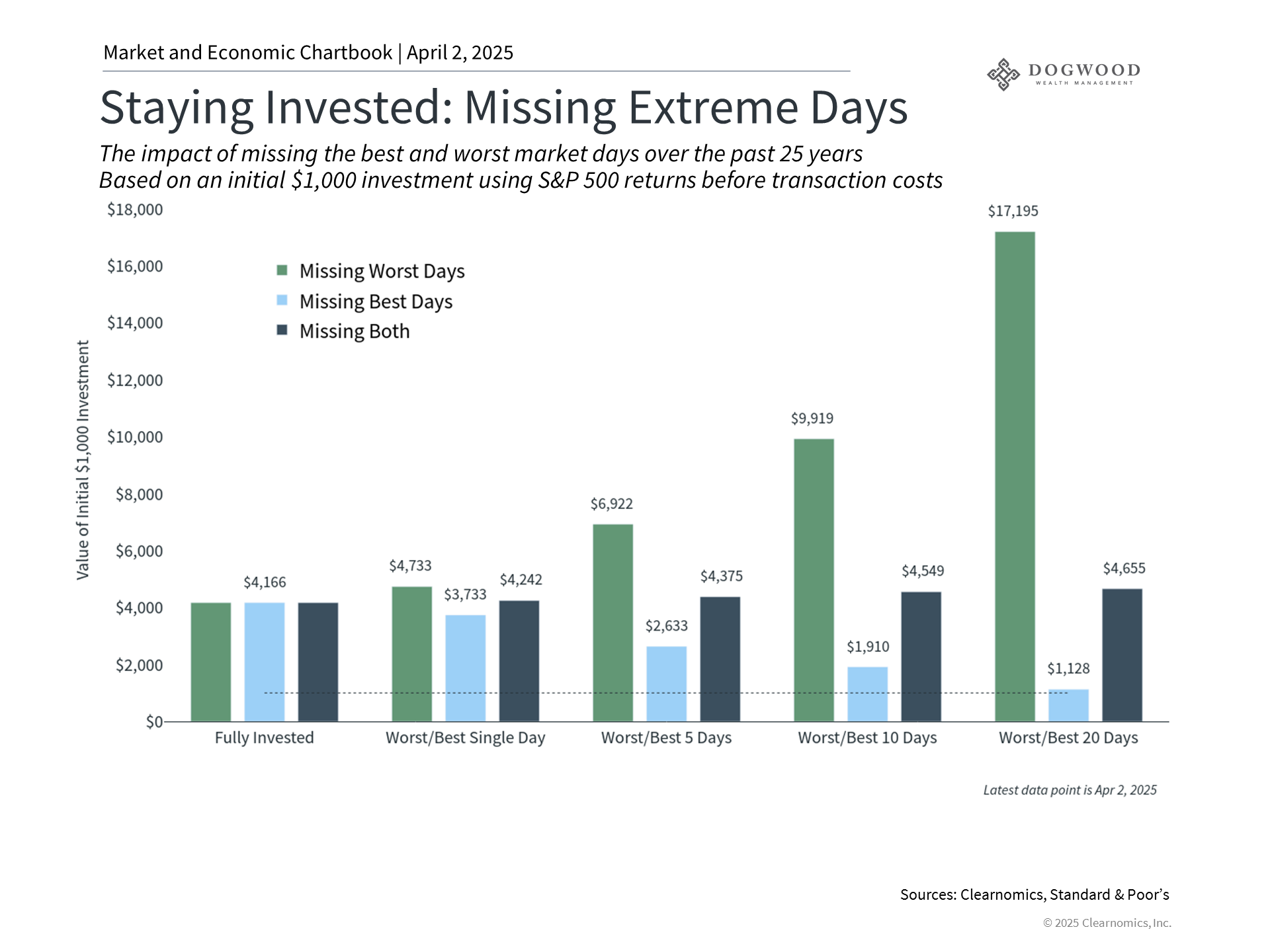
Market volatility often tempts investors to try timing their market exposure, seeking safety during downturns. However, such strategies frequently underperform since investors typically miss the initial stages of recovery. Similarly, waiting for clear signs of market improvement can diminish long-term returns. The accompanying chart demonstrates the impact of missing both extreme positive and negative market days over a 25-year period, along with the net effect. While avoiding market downturns appeals to all investors, accurately timing these moves proves extremely challenging, if not impossible. Even with perfect timing of extreme market days, the improvement over staying invested is minimal. Given that investors usually react to past events rather than anticipate future ones, maintaining a long-term investment approach typically yields better results than attempting to time market movements. Trade policy effects on markets and technology sector
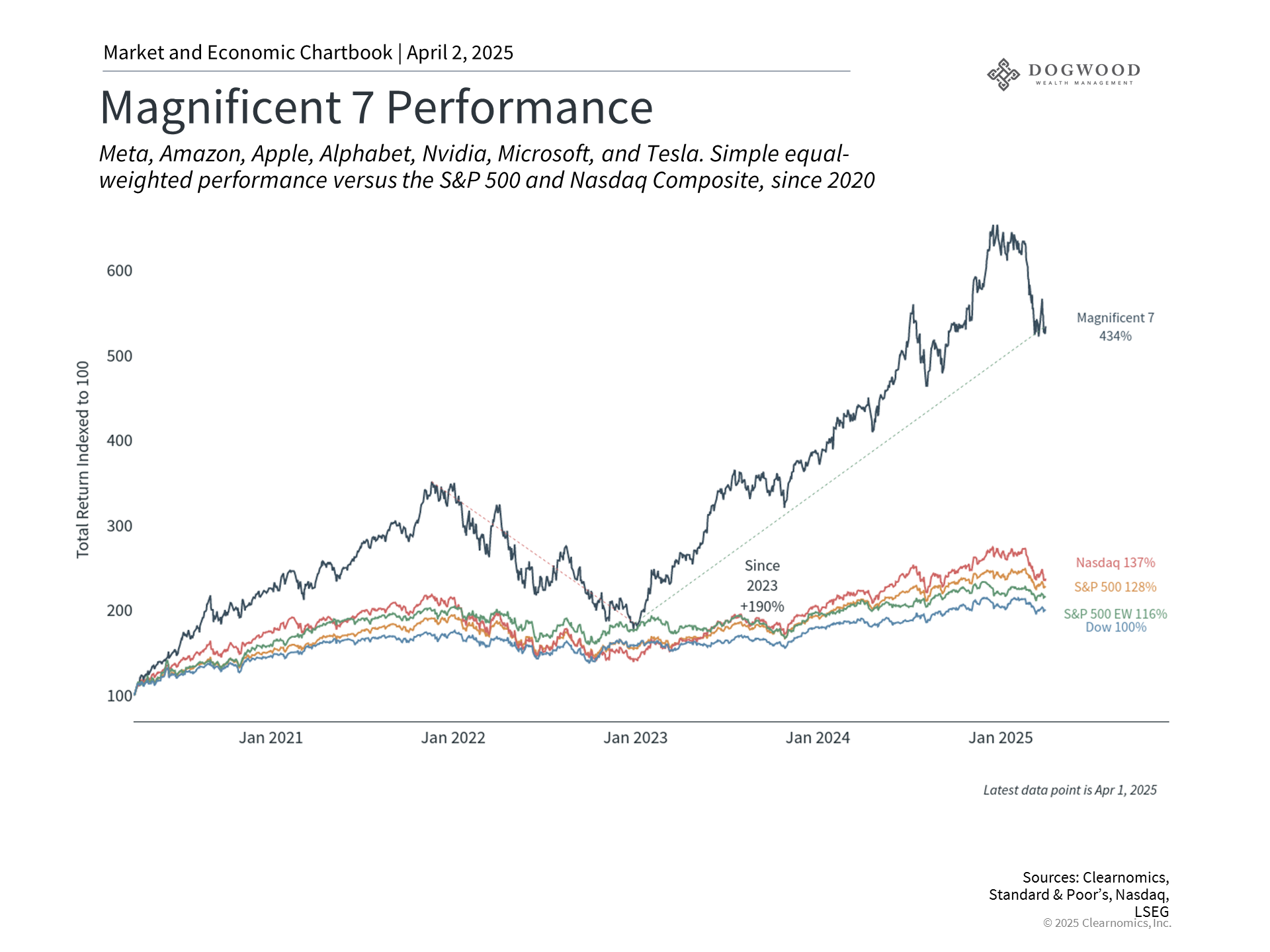
Markets are processing various potential outcomes from the administration's tariff policies, which are often employed as negotiating leverage on multiple issues including immigration. Consumer sentiment and inflation expectations have already been affected by concerns over higher prices. Extended trade tensions and reciprocal tariffs could potentially impact global economic growth over time. The full economic implications of trade policy changes typically emerge gradually. It requires multiple quarters to understand how businesses adjust supply chains, whether higher costs affect consumer prices, and how trading partners respond with countermeasures. The technology sector, which previously led market gains, has experienced significant declines as shown in the chart. The Magnificent 7 stocks' recent volatility should be viewed within their longer-term performance context, having generated substantial returns over the full cycle. These pronounced swings exemplify what investors mean when discussing higher volatility in certain market segments. Meanwhile, several other sectors including Energy, Healthcare, Utilities, and Financials have demonstrated resilience. Indeed, eight of eleven S&P 500 sectors maintain positive returns over the past year despite recent volatility. This highlights the value of diversification across market sectors within well-balanced portfolios aligned with long-term financial objectives. The bottom line? While tariff-related concerns have increased market volatility, particularly affecting technology stocks, historical evidence supports maintaining a long-term investment approach for achieving financial goals. 1S&P 500 declined 9.2% between February 19, 2025 and March 28, 2025. The Nasdaq fell 14.1%, between December 16, 2024 and March 28, 2025 | |||
Dogwood Wealth Management, LLC. ("Dogwood") is a Registered Investment Advisor ("RIA") with the U.S. Securities and Exchange Commission (“SEC”). Dogwood provides investment advisory and related services for clients nationally. Dogwood will maintain all applicable registrations, notice filings, and licenses as required by the various states in which Dogwood conducts business, as applicable. Dogwood renders individualized responses to persons in a particular state only after complying with all regulatory requirements, or pursuant to an applicable state exemption or exclusion. |
Analyzing Market Corrections in the Context of Trade Policy